- Author : Dato’ Hj. Mohamad Shariff Bin Hj. Abu Samah & Dato’ Hjh. Asidah Binti Hj. Mohd Ali
- ISBN : 9789678922340
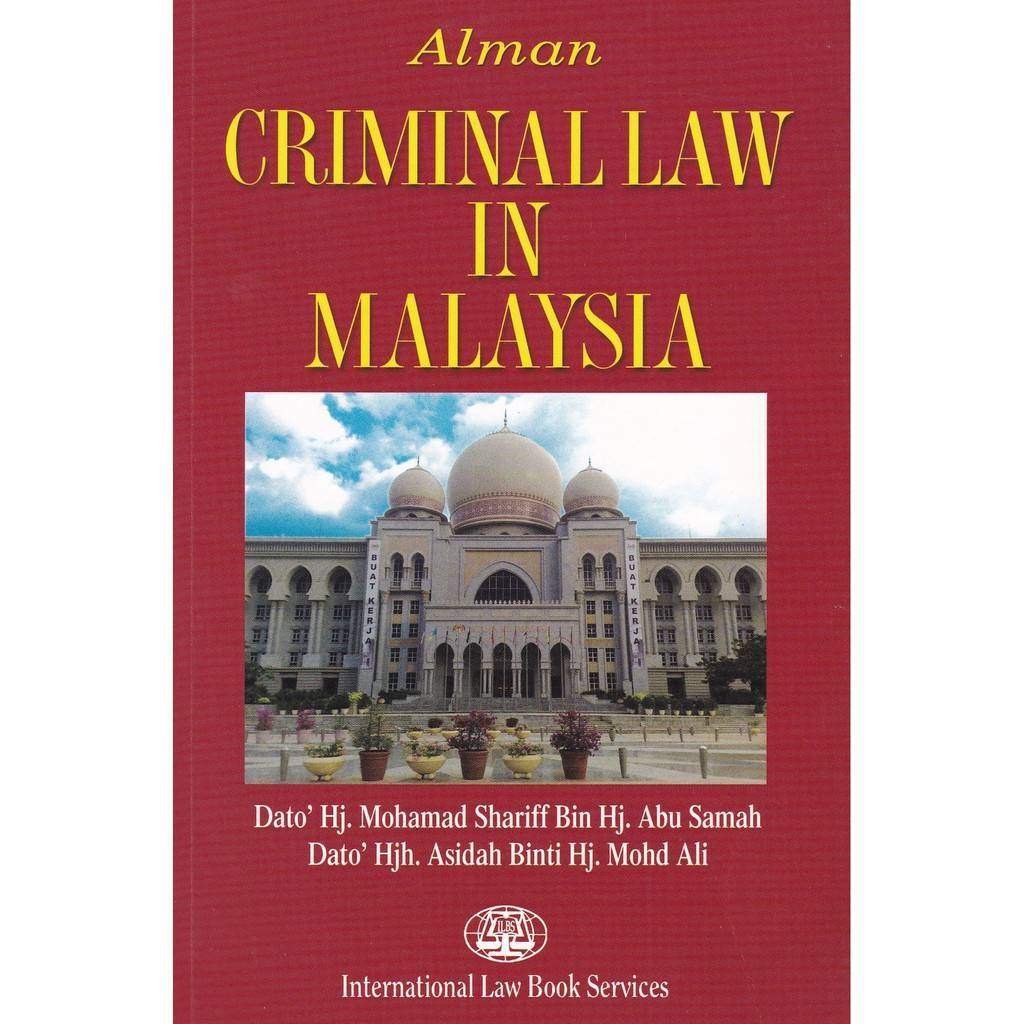
ALMAN CRIMINAL LAW IN MALAYSIA
RM95.00
Alman : Criminal Law in Malaysia is an updated and revised translation of the Bahasa Malaysia version, which was first published in 2008. It contains many important and selected topics in criminal law, among others, the Concept of Criminal Liability, Offences Relating to Homicide, Murder, Rape, Incest and others. All these topics have been critically analysed from the perspective of the prosecution and defence. Comprehensive and complete discussion of the cases together with the newly decided cases have been added in all chapters. A special chapter which focuses on the offense of waging war against the Yang-di-Pertuan Agong has been included in this edition.
Customer Reviews
There are no reviews yet.
Only logged in customers who have purchased this product may leave a review.
Related products
-

BLACKSTONE’S CRIMINAL PRACTICE 2018 ( IN FAIR CONDITION )
RM550.00Led by Professor David Ormerod and David Perry QC, our team of authors has been hand-picked to ensure that you can trust our unique combination of authority and practicality. With a simultaneous supplement containing essential materials, you can rely on Blackstone’s Criminal Practice to be your constant companion through every courtroom appearance.
This new edition has been meticulously revised to provide extensive coverage of all new legislation, case law, and Practice Directions. With supplements, free Quarterly Updates, and monthly web updates, you can trust Blackstone’s Criminal Practice to provide reassurance on all the latest developments in criminal law and procedure.
PART A: CRIMINAL LAWA1: Actus reus: the external elements of an offenceA2: Mens ReaA3: General defencesA4: Parties to offencesA5: Inchoate offencesA6: Corporate LiabilityA7: Human rightsA8: Territorial and extra-territorial jurisdictionA9: European Union Law
PART B: OFFENCESB1: Homicide and related offencesB2: Non-fatal offences against the personB3: Sexual offencesB4: Theft, handling stolen goods and related offencesB5: Fraud and blackmailB6: Falsification, forgery and counterfeitingB7: Company, commercial and insolvency offencesB8: Damage to propertyB9: Offences affecting securityB10: Terrorism, piracy and hijackingB11: Offences affecting public orderB12: Offences relating to weaponsB13: Offences affecting enjoyment of premisesB14: Offences against the administration of justiceB15: Bribery and Misconduct in Public OfficeB16: Revenue customs and social security offencesB17: Offences involving misuse of computersB18: Offences involving writing, speech or publicationB19: Offences related to drugsB20: Offences relating to dangerous dogs and animal welfareB21: Offences relating to money laundering and the proceeds of criminal conductB22: Immigration offences
PART C: ROAD TRAFFIC OFFENCESC1: Definitions and basic principles in road traffic casesC2: Procedure and evidence in road traffic casesC3: Offences relating to driving triable on indictmentC4: Offences relating to documents triable on indictmentC5: Drink-driving offencesC6: Summary traffic offencesC7: SentencingC8: Schedules 2 and 3 to the Road Traffic Offenders Act 1988
PART D: PROCEDURED1: Powers of investigationD2: The decision to prosecute and diversionD3: Courts, parties and abuse of processD4: Criminal Procedure Rules and case managementD5: Preliminary procedures in magistrates’ courtsD6: Classification of offences and allocation (determining mode of trial)D7: BailD8: Assets recoveryD9: DisclosureD10: Sending cases from the magistrates’ court to the Crown CourtD11: The indictmentD12: Arraignment and pleasD13: JuriesD14: Special measures and anonymity ordersD15: Trial on indictment: general matters and pre-trial procedureD16: Trial on indictment: the prosecution caseD17: Trial on indictment: the defence caseD18: Trial on indictment: procedure between close of defence evidence and retirement of juryD19: Trial on indictment: procedure relating to retirement of jury and verdictD20: Trial on indictment: sentencing procedureD21: Summary trial: general and preliminary mattersD22: Summary trial: the course of the trialD23: Sentencing in the magistrates’ courtD24: Trial of juvenilesD25: Civil behaviour orders: ASBOs, Closure Orders, SCPOs, and VOOsD26: Appeal to the Court of Appeal (Criminal Division) following trial on indictmentD27: Procedure on appeal to the Court of Appeal (Criminal Division)D28: Reference to the Court of Appeal (Criminal Division) following trial on indictmentD29: Challenging decisions of magistrates’ courts and of the Crown Court in its appellate capacityD30: Appeals to the Supreme Court and the role of the European Court of Justice and the European Court of Human RightsD31: ExtraditionD32: Public fundingD33: Costs
ART E: SENTENCINGE1: Sentencing: general provisionsE2: Custodial sentences: general provisionsE3: Mandatory life sentencesE4: Dangerous offendersE5: Prescribed custodial sentencesE6: Suspended sentencesE7: Custodial sentences: detention and custody of offenders under 21E8: Community ordersE9: Youth rehabilitation ordersE10: Referral ordersE11: Reparation ordersE12: Absolute and conditional dischargesE13: Binding overE14: Orders against parentsE15: FinesE16: Compensation ordersE17: Restitution ordersE18: Deprivation and forfeiture ordersE19: Confiscation ordersE20: Recommendation for deportationE21: Exclusions and disqualificationsE22: Mentally disordered offendersE23: Notification requirements under the Sexual Offences Act 2003E24: Rehabilitation of offenders
PART F: EVIDENCE F1: General principles of evidence in criminal cases F2: The discretion to exclude evidence; evidence unlawfully, improperly or unfairly obtained F3: Burden and standard of proof and presumptions F4: Competence and compellability of witnesses and oaths and affirmations F5: Corroboration and Care Warnings F6: Examination-in-chief F7: Cross-examination and re-examination F8: Documentary evidence and real evidence F9: Public policy F10: Privilege F11: Opinion evidence F12: Admissibility of previous verdicts F13: Character evidence: evidence of bad character of accused F14: Character evidence: admissibility of evidence of accused’s good character F15: Character evidence: evidence of bad character of persons other than the accused F16: The rule against hearsay: general principles F17: Exceptions to the rule against hearsay (excluding confessions) F18: The rule against hearsay: confessions F19: Evidence of identification F20: Inferences from silence and the non-production of evidence
APPENDICES Appendix 1 Codes of Practice under the Police and Criminal Evidence Act 1984 Appendix 2 Attorney-General’s GuidelinesAppendix 3 The Code for Crown ProsecutorsAppendix 4 Disclosure
(SIMULTANEOUS) SUPPLEMENT 1 Criminal Procedure Rules 2016 and Criminal Practice Directions Sentencing Guidelines -

ARCHBOLD MAGISTRATES’ COURTS CRIMINAL PRACTICE 2011 ( IN GOOD CONDITION )
RM400.00A POWERFUL FORMULA IN THE MAGISTRATES’ COURT
Bringing you the authority, trust and reassurance you would expect from Archbold, but designed specifically for the magistrates’ court, Archbold Magistrates’ Courts Criminal Practice arms you with all the expertise you need to successfully practice in the magistrates’ court.
The works presents the information you need in an order that mirrors the progress of a case. Each offences chapter is set out in the same logical way, defining the offence with extracts from the relevant statutes; then dealing with procedure, elements of the offence, defences and sentencing.
Archbold Magistrates’ Courts Criminal Practice:
- Covers all criminal matters dealt with in the magistrates’ court
- Follows a chronological order, so that you can find the information you need quickly
- Gives you the law and procedures from those who really understand how it works
- Provides practical guidance on substantive law, showing what the prosecution must prove, defences and sentencing for each offence
- Includes full citation of authorities from statute and case law which can be cited in court
- Features specialist coverage of youth courts, with guidance on proceedings and the regime for vulnerable witnesses
- Uses a clear style and straightforward approach, so that every aspect is clearly explained
- Sets out how to deal with mentally disordered offenders, showing what special arrangements apply
- Contains flowcharts, procedural checklists, core statutory material, Codes, Rules and Practice Directions for ease of reference
- Ensures portability with a one-volume format, ideal for court use
- Keeps you up to date with a supplementation service
FOCUSED ON THE LATEST DEVELOPMENTS
The new edition of Archbold Magistrates’ brings you completely up to date with all the latest case law and legislation. It contains the new Criminal Procedure Rules 2010 as well as the recently published Definitive Guidelines on “Overarching Principles – Sentencing Youths”, published by the Sentencing Guidelines Council.
-
Criminal Trial and Investigation (In two volumes)
RM900.00Criminal Trial and Investigation by P.C. Banerjee is an odyssey towards Justice and is meant for doing Justice not only to the victim but also to the society at large. Criminal Trial is a process for doing Public Justice by punishing the criminal. A judge does not preside over a Criminal Trial merely to see that no innocent man is punished but also presides to see that a guilty man does not escape. Ipso facto, both are public duties. -
![TEST YOURSELF IN [A] EVIDENCE, [B] CIVIL PROCEDURE, [C] CRIMINAL PROCEDURE, [D] SENTENCING TENTH EDITION ( IN GOOD CONDITION )](data:image/png;base64,iVBORw0KGgoAAAANSUhEUgAAAVQAAAIIAQMAAAAL+ITnAAAABlBMVEUAAAD///+l2Z/dAAAAAXRSTlMAQObYZgAAAAlwSFlzAAAOxAAADsQBlSsOGwAAAC1JREFUeNrtwQENAAAAwqD3T20ON6AAAAAAAAAAAAAAAAAAAAAAAAAAAAAAvgxZYAABwaPcbAAAAABJRU5ErkJggg==)
TEST YOURSELF IN [A] EVIDENCE, [B] CIVIL PROCEDURE, [C] CRIMINAL PROCEDURE, [D] SENTENCING TENTH EDITION ( IN GOOD CONDITION )
RM100.00The multiple choice questions in this book have been designed to help law students reinforce their knowledge and understanding in the important areas of Evidence, Civil Procedure, Criminal Procedure and Sentencing.
The book is a distillation of many years’ teaching experience by senior teaching staff at the Inns of Court School of Law. The book contains 140 multiple choice questions together with note-form answers. The questions will enable students of these subjects to test with speed and accuracy their comprehension of the main principles and the leading cases. This new edition has been thoroughly updated to reflect all recent developments in the law.
Both LLB and Bar students will find this book an invaluable aid to effective revision. Not only does it cover the core subjects of Evidence, Civil Procedure, Criminal Procedure, and Sentencing, but it does so in a totally unique way.
-
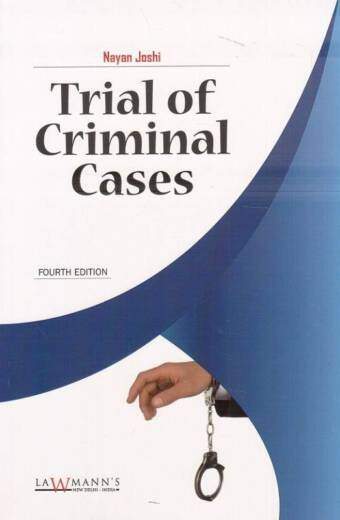
TRIAL OF CRIMINAL CASES
RM120.00* 1 COPY LEFT
“Trial” means the conclusion, by a competent tribunal of questions in issue in legal proceedings, whether civil or criminal.
In the oxford Dictionary the meaning of the word “trial” is: (1) The examination and determination of a cause by a judicial tribunal, determination of the guilt or innocence of an accused person by a Court; (2) The determination of a person’s guilt or innocence, of the right cousness of his cause, by a combat between the accuser and accused.
Generally speaking the word “trial”, is understood as referring to the stage of the proceedings in a criminal case after the charge had been framed against the accused. But sometimes the word ‘trial’ has been used in the Criminal Procedure Code itself as referring to a stage of proceedings prior to the framing of the charges.
-
LAW OF SEDITION ( IN GOOD CONDITION )
RM49.00Contents :
- MEANING, SCOPE AND HISTORY OF SEDITION
- CHANGING INTERPRETATION OF THE CONCEPT OF SEDITION AND SOME NOTABLE TRIALS
- SEDITION VIS-A-VIS THE FREEDOM OF SPEECH AND EXPRESSION
- LAW OF SEDITION IN INDIA IN THE PRESENT CONTEXT – AN ANALYSIS
- CONCLUSION AND SUGGESTIONS
- APPENDICES
-
RIGHTS OF SUSPECT AND ACCUSED UNDER ISLAMIC AND MALAYSIAN LAW
RM37.50This book analyses the Islamic viewpoint on the rights of a suspect or an accused at all stages of criminal procedures. Al-Qur’an, al-sunnah and other sources of Islamic Law have been the basis of discussion. The opinion of the four established sunni schools have also been referred to. The findings are thereafter compared with Malaysian law. It has been observed that there are more similarities than differences between the two systems of law. In some aspects where there are differences, it is hoped that the implementation of suggestions made throughout this book could harmonise the differences and at the same time refined laws could be introduced in order to maintain justice.
![TEST YOURSELF IN [A] EVIDENCE, [B] CIVIL PROCEDURE, [C] CRIMINAL PROCEDURE, [D] SENTENCING TENTH EDITION ( IN GOOD CONDITION )](https://marsdenlawbook.com/wp-content/uploads/2020/07/test-scaled-340x520.jpg)