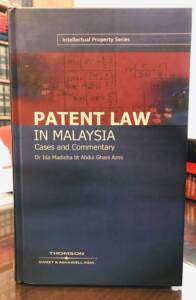
The enforcement of patent rights raises complex, and, from a private international law perspective, unique difficulties. Since intellectual property practitioners started to seek the consolidation of cross-border patent disputes, the interplay of private international rules has led to drastic changes in patent litigation across Europe. This book analyses in detail both the European rules on jurisdiction (the Brussels Convention and its successors) and the choice of law rules as they apply to cross-border patent disputes, and will be essential reading for both intellectual property lawyers and international commercial litigation specialists.; At the jurisdictional stage, the basic question is whether the current jurisdictional framework provides a basis for the concentration of related litigation. For jurisdictional purposes, patent enforcement is a tort. Accordingly, cross-border patent enforcement attempts may generally be undertaken at the forum of the defendant’s domicile, the place of the tort, and, as far as provisional measures are concerned, another forum with a sufficient connection to the dispute. On the other hand, the application of the current jurisdictional framework to international patent infringement disputes leads to significant difficulties such as the pre-emptive effect of proceedings pending abroad or the jurisdictional consequences of a patent validity challenge.; At the choice of law stage, this book provides a comparative overview of the rather unexplored issues arising in multinational patent enforcement. De lege Fernanda, it seems that, because of the territorial nature of patents, a distributive application of the law of the protecting State (lex loci protectionis) appears to be the most consistent choice of law rule.
Cross-border Enforcement of Patent Rights
RM190.00
By: Marta Pertegas Sender
ISBN: 0199249695, 9780199249695
Published: September 2002
Country of Publication: UK
Customer Reviews
There are no reviews yet.
Only logged in customers who have purchased this product may leave a review.
Related products
-

Ambush Marketing and Brand Protection Law and Practice Second Edition
RM870.00ALL PRICES ARE SUBJECT TO CURRENCY FLUCTUATION. PLEASE CALL IN FOR PRICES.
- The only book specifically focussed on the protection of major event sponsorship and laws to control ambush marketing
- Detailed treatment of the laws relating to ambush marketing in the UK and other jurisdictions including the US, Australia, New Zealand, Canada and South Africa, as well as some European countries
- Invaluable guidance for brand owners and their legal advisors on how to protect their brand and their investment in sponsoring major events
New to this Edition:
- New chapter examining the principles and common clauses in sponsorship contracts as well as the differing types of sponsorship relationship
- Covers recent developments including concerns about the distinctiveness of marks such as ‘WORLD CUP’ and ‘LONDON 2012’
- Considers recent cases relating to the filing of marks in bad faith, trade mark use, the meaning of taking ‘unfair advantage’ and the meaning of ‘detriment’ in relation to dilution
- New section on the Company Names Adjudicator
- Increased geographical coverage
Ambush marketing is any attempt to create an unauthorised or false association with an event thereby interfering with the legitimate contractual rights of the event’s official marketing partners. Looking at both traditional intellectual property rights (such as trade marks, copyright and designs) as they relate to sporting events, and event-specific legislation (such as that of the Olympics), this book gives comprehensive and detailed coverage of ambush marketing. Also considered are the areas of law which can be used to prevent ambush marketing by intrusion (such as laws to prevent fly postering, street trading, the placing of posters and billboards, and control of aerial space). With the United Kingdon hosting three major events; the Olympic and Paralympic Games in 2012; the Commonwealth Games in 2014; and the Rugby World Cup in 2015, this new edition provides a timely and topical update on the area. A materials section is included providing ‘ambush marketing’ specific legislation both in the UK and other countries.
Table of Contents
Part A – Ambush Marketing, Concepts, Developments, and Incidents
1:Ambush Marketing
2:The Evolution of Ambush Marketing Laws
Part B- Ambush Marketing: United Kingdom and European Union Law
3:Trade Marks and Merchandising
4:Passing Off, Copyright, and Decisions and Related Rights
5:Symbols and Emblems
6:Sui Generis Protection against Ambush Marketing By Association
7:Licensing, Broadcasting, and Exhaustion
8:Advertising and Trade Regulation
9:Selling Tickets or Using them for Promotional Purposes
10:Civil and Criminal Proceedings and Border Control
Part C: Ambush Marketing: Laws around the World
11:Australia
12:Canada
13:New Zealand
14:South Africa
15:United States -

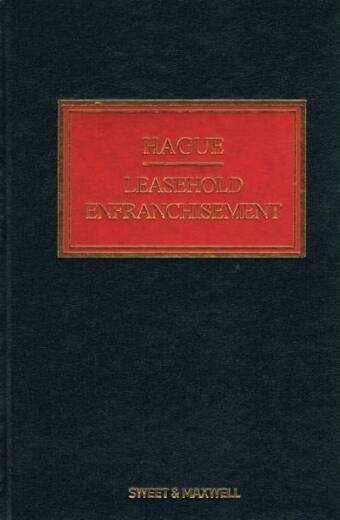
HAGUE LEASEHOLD ENFRANCHISEMENT FIFTH EDITION ( IN GOOD CONDITION )
RM300.00Hague on Leasehold Enfranchisement gives you comprehensive, detailed guidance on each stage of the leasehold enfranchisement process.
Written by Anthony Radevsky and Damian Greenish, Hague sets out the rights and responsibilities of the landlord and tenant, deals with the intricacies of qualification and valuation, and also covers the related areas of mortgages, sub-tenants and trusts. Hague includes full interpretation of relevant legislation, with all applicable statutes and statutory instruments reproduced, to help you to see precisely what the law requires and to take the necessary action.
Fully updated to take account of legal developments, the new edition of Hague:-
- Includes rewritten and updated chapters on valuation
- Considers the extensive reforms and case law resulting from the Commonhold and Leasehold Reform Act 2002
- Provides a rewritten definition of “house” which is applied throughout
- Discusses recent case law including the landmark Court of Appeal decision: Earl Cadogan v Sportelli
- Contains expanded appendices containing new Regulations, the 2006 Lands Tribunal Practice Direction and the new Land Registry Practice Guide
Contents:Acquiring the Freehold: Premises Qualifying, Acquiring the Freehold: Tenancies Qualifying, Acquiring the Freehold: Persons Notices and their Effect, Acquiring the Freehold: Acquisition Terms, Extending the Lease, Extending the Lease: Valuation, Acquiring the Freehold: Valuation, Landlord’s Overriding Rights, Sub-tenants, Rent Charges, Mortgages, Special Classes of Landlord Settlements and Trusts, Court and Tribunal Proceedings, Places of Worship, The Right to Collective Enfranchisement, Premises Qualifying ,Tenancies Qualifying, Qualifying Tenants and Landlords Procedure: Preliminary Inquiries and Initial Notice. Participating Tenants and Nominee Purchaser (The RTE Company and Participation in a Claim)Procedure Following Initial Notice Purchase Price and Terms, Termination or Completion of Claim, The Individual Right to a New Lease ,New Lease: Procedure Termination and Suspension of New Lease Claim, The Grant of the New Lease New Lease: Premium 1993. Act Proceedings Management Schemes,Precedents,Appendices
-

CONFIDENTIAL INFORMATION LAW IN MALAYSIA
RM310.00This publication provides in detail the law of confidential information which protects information including opinions and ideas that are precluded by copyright and other statutory regimes. The law of confidential information provides valuable protection not only to personal, commercial or industrial information but also to governmental or administrative information. This law has its importance particularly in the area of trade secrets and business information and gives protection to information that is not released to the public or part of the public domain. It also provides a basis of action for protection of privacy.
The publication further explains in great detail the aim of the particular area of law concerned, i.e. to act as a safeguard from exploitation of trade secrets, encroachments of privacy, misappropriation of confidential information without just cause and excuse and to protect national security and the government’s integrity. It protects both the owner and its secrets based on an equitable principle, that those who receive confidential information should not take advantage of them to the detriment of the confider or the owner of the information.
The publication also provides commentary on cases pertaining to the subject matter, with reference to the United Kingdom, Malaysia and other relevant jurisdictions.
-
LexisNexis Essential Reference – Intellectual Property (Patent)
RM250.00Authors: LexisNexis
Publisher: LexisNexisThe grant of patent in Malaysia is governed by the Patent Act 1983 and the Patents Regulations 1986 which came into force on 1 October 1986. These statutes also govern the validity of patent rights for inventions in Malaysia. The Act has repealed the earlier system of registering patents in the UK and re-registering them in Malaysia. The Act provides not only for the grant of patents but also for the grant of ‘petty’ patents which are also known as ‘utility innovations’. This is to cover the ‘lesser’ inventions which may not be covered under the stringent requirements laid down for the grant of a patent. This is to encourage and support creativity in inventions.
-
Intellectual Property: Commentary & Materials, 6th Edition
RM600.00Author: David Price, Colin Bodkin, Fady Aoun
ISBN13: 9780455238685Published: March 2017Publisher: Thomson Reuters AustraliaCountry of Publication: AustraliaFormat: PaperbackRM623.00 -
Malaysian Specialist Intellectual Property and Construction Courts: Practice & Procedure
RM200.00- Publication Date : Dec – 2020
- Author : Dato Lim Chong Fong
- ISBN : 9789672919162
- Format : Hardcover + eBook
- Country : Malaysia
-
LexisNexis Essential Reference – Intellectual Property (Industrial Design)
RM200.00Authors: LexisNexis
Publisher: LexisNexisIn Malaysia, protection for industrial designs are governed by the Industrial Designs Act 1996 and the Industrial Designs Regulations 1999. Prior to the introduction of this Act on 1 September 1999, the law on industrial designs in Malaysia was governed by the United Kingdom Designs (Protection) Act 1949. An industrial design is the overall appearance of an article or a product which may consist of two or three dimensions. To be eligible for registration, industrial designs must be new and not include a method of construction or design that is dictated solely by function. Industrial designs that are contrary to public order or morality shall not be registrable.