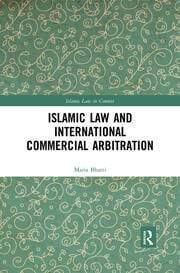
This book examines the intersection between contemporary International Commercial Arbitration and Shariʿa law in order to determine possible tensions that may arise between the two systems. It develops evidentiary and procedural rules under Shariʿa, as well as examining the consequences of stipulating qualifications of arbitrators based on gender and/or religion. The author extensively analyses the prohibition against interest (riba) and uncertainty (gharar) under Shariʿa and its impact on arbitration agreements, arbitral awards and public policy. The book also explores the prohibition against riba in light of international conventions, such as the United Nations Convention on Contracts for the International Sale of Goods. Case studies in the book include the Asian International Arbitration Centre, formerly the Kuala Lumpur Regional Centre for Arbitration, and the International Islamic Centre for Reconciliation and Arbitration, as well as the ‘Shari’a Standards’ developed by the Accounting and Auditing Organization for Islamic Financial Institutions.
The book will be a valuable resource for academics, students and practitioners working in the areas of Islamic law and the Islamic finance industry.
Table Of Contents
Chapter 1: Introduction
Chapter 2: The Theoretical and Practical Framework for Shariʿa Arbitration
Chapter 3: Conflict of Laws and Shariʿa as Choice of Law
Chapter 4: Composition of the Arbitral Tribunal
Chapter 5: Evidence and Procedure in Shariʿa Arbitration
Chapter 6: The Impact of Gharar and Riba on Arbitrability and Arbitration Agreements
Chapter 7: Interest on Arbitral Awards and the Prohibition against Riba
Chapter 8: Shariʿa Public Policy and the Recognition and Enforcement of Arbitral Awards
Chapter 9: Reform Proposals, Further Research and Conclusion