Author : Raymond Walton, Muir Hunter
ISBN: 0421229101
Published: June 1978
Country of Publication: UK
Format: Hardback
RM185.00
There are no reviews yet.
Only logged in customers who have purchased this product may leave a review.
Author: LexisNexis Editorial Team
Publication Date: November 2025
ISBN: 9786297829135
Format: Softcover
Country: Malaysia

This book should be a practitioner’s first port of call for any question about the law of insolvency, whether corporate, personal, or cross-border in nature. This breadth of material is rendered accessible by a focus on the key problems and decision making processes involved in each area, and has been fully rewritten to incorporate the changes in practice and procedure made by the Insolvency Rules 2016.
Main Features:
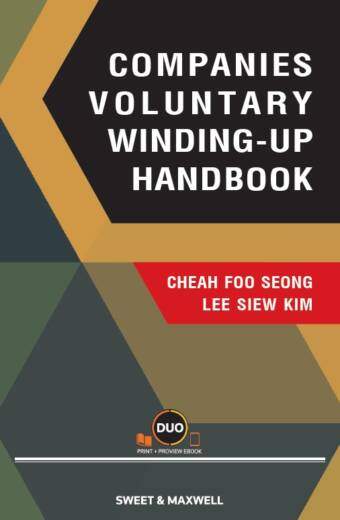
Authors: Cheah Foo Seong, Lee Siew Kim
ISBN: 9789672339939
Publication Date: Aug 2020
Format: Print & Proview eBook
Country: Malaysia

This book is written based on the Insolvency Act 1967 (Act 360) as amended by the Bankruptcy (Amendment) Act 2017 (Act A1534). It is intended to be a guide to lawyers, students, judicial officers, officers of the Department of Insolvency and other persons concerned with insolvency proceedings.
This book provides a comprehensive introduction to personal insolvency law and explains the eight acts of bankruptcy as laid down in the Insolvency Act 1967. It details the voluntary arrangements available in bankruptcy and provides discussions on bankruptcy notice and petition procedures. It elaborates on the bankruptcy order as well as the disqualifications and disabilities of a bankrupt.
The book also contains discussions on how the bankrupt may be discharged or the bankruptcy order annulled, and includes discussion on appeals and stay procedures against the bankruptcy order. Concise yet comprehensive, with discussions well supported by statutory and case authorities, this book provides a clear and organised account of the practice of insolvency law in Malaysia.
Key Features
Table of Contents
Appendix 1. Guide to Complete Statement of Affairs Form
Appendix 2. Statement of Income and Expenses
Appendix 3. Application to Open or Activate a Bank Account
Appendix 4. Application to Travel Overseas
Appendix 5. Surety Form
Appendix 6. Sponsor Form
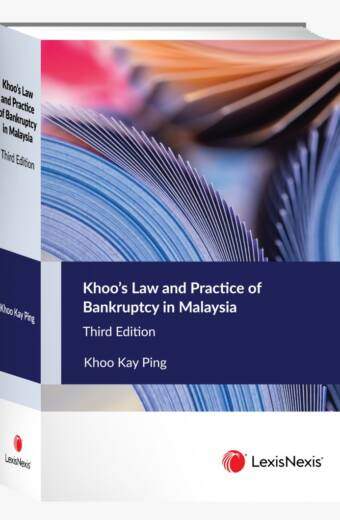
Since its inception in 2000, Khoo’s Law and Practice of Bankruptcy in Malaysia has been an effective reference book on the bankruptcy law and practice of the country, used not only in the law offices and the courts but also in the local universities and colleges. The book has been referred to in numerous reported cases, including two Federal Court decisions. 18 years after the second edition, the book has now been updated to incorporate all relevant reported cases up to 2020. The content has also been updated to reflect the changes introduced by the 2017 and 2020 Amendment Acts, thus providing readers a more comprehensive overview of the present landscape of bankruptcy law in Malaysia.
TABLE OF CONTENTS
Chapter 1 – Introduction
Chapter 2 – Bankruptcy Jurisdiction
Chapter 3 – Acts of Bankruptcy
Chapter 4 – Voluntary Arrangement
Chapter 5 – Bankruptcy Notice
Chapter 6 – Bankruptcy Petition
Chapter 7 – Interim Applications
Chapter 8 – Bankruptcy Order
Chapter 9 – Discovery, Realisation and Distribution of Estate Chapter 10 – Discharge
Chapter 11 – Special Forms of Administration
Chapter 12 – Director-General of Insolvency
Chapter 13 –Procedure
Chapter 14 – Criminal Offences
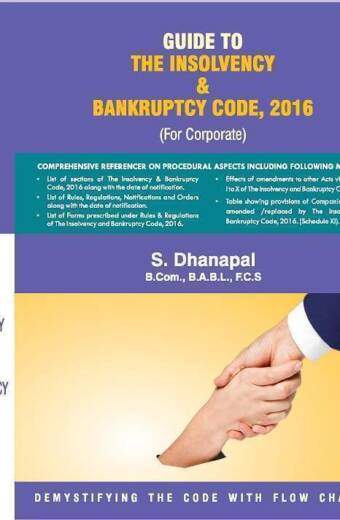
Insolvency and Bankruptcy Code, 2016 (Code) provides for a specialised forum to oversee all insolvency and liquidation proceedings for individuals, SMEs and corporates.
It empowers all classes of creditors (secured and unsecured lenders, employees, trade creditors, regulatory authorities) to trigger a resolution process in case of non payment of a valid claim.
Provides for immediate suspension of the Board of Directors and promoters’ powers.
Provides for an insolvency professional to take control of the Corporate debtor.
Enables a ‘stand-still period’ which provides stakeholders time to facilitate discussions and arrive at a common resolution rather than running independent processes.
Offers a finite time limit within which the debtor’s viability can be assessed and a resolution process agreed. The power of commercial decision to revive or liquidate the Company is on the creditors rather than the courts.
Provides for a balanced approach between rehabilitation and recovery and provides for compulsory liquidation of corporate debtors in the event the resolution has not been agreed within 180 days of the resolution process.
Aims to develop a detailed and accessible information system to reduce information asymmetry between the various participants of the insolvency process.
Provides for a clearly-defined waterfall mechanism for payment of debt in the event of a liquidation.