“In Malaysia, protection for industrial designs are governed by the Industrial Designs Act 1996 and the Industrial Designs Regulations 1999. Prior to the introduction of this Act on 1 September 1999, the law on industrial designs in Malaysia was governed by the United Kingdom Designs (Protection) Act 1949. An industrial design is the overall appearance of an article or a product which may consist of two or three dimensions. To be eligible for registration, industrial designs must be new and not include a method of construction or design that is dictated solely by function. Industrial designs that are contrary to public order or morality shall not be registrable. The owner of an industrial design may, upon filing and successfully completing an application, register the design in respect of a specified article with the Registrar of Industrial Designs. The registered industrial design can be protected between a period of 5 to 25 years This publication is designed to offer a clear overview of the legislation that governs Industrial Designs and seek to explain the legal approach adopted by the courts. The publication includes: Commentaries on defining specific terms within the Act, The commentaries also cross-refer to local and international cases, Relevant local and international legislation, Summary of recent Industrial Designs cases This publication will serve as an indispensable guide and an essential reference for intellectual property practitioners specializing in industrial designs, corporate counsel, prosecutors, judges, students, lecturers, as well as researchers. “
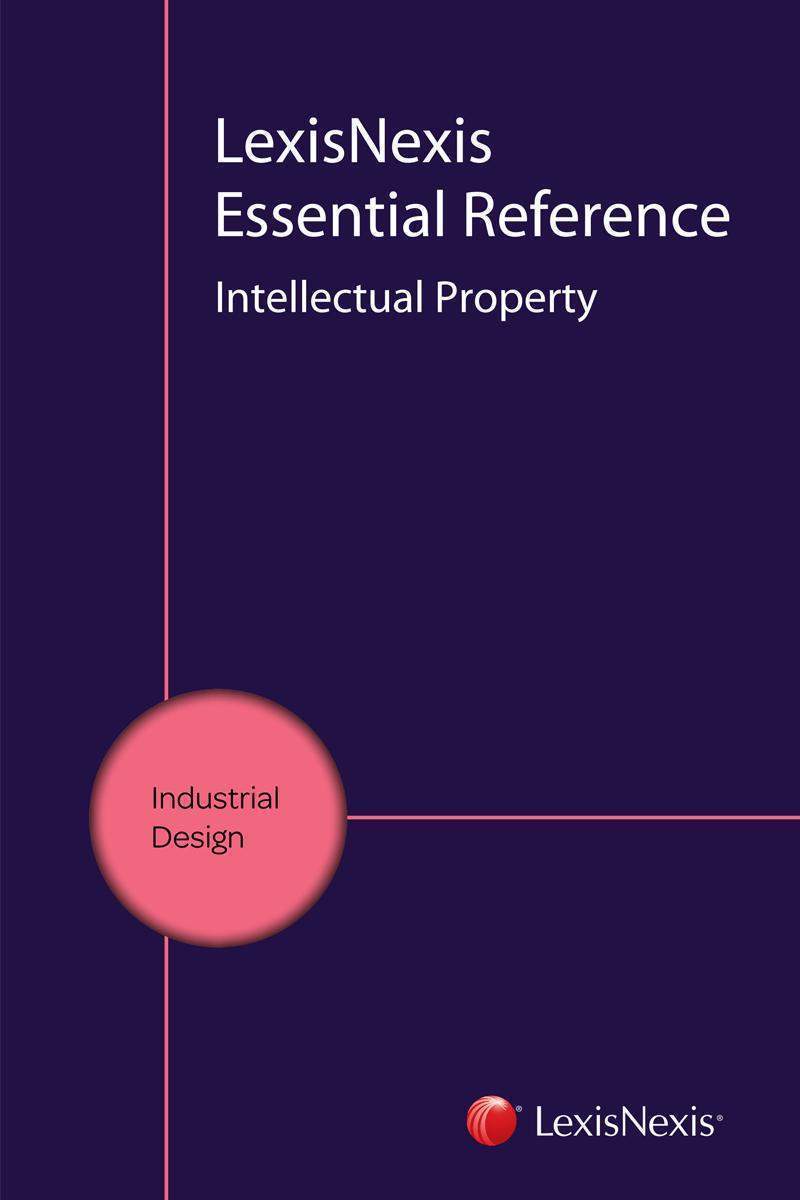
LexisNexis Essential Reference – Intellectual Property (Industrial Design)
RM200.00
Authors: LexisNexis
Publisher: LexisNexis
In Malaysia, protection for industrial designs are governed by the Industrial Designs Act 1996 and the Industrial Designs Regulations 1999. Prior to the introduction of this Act on 1 September 1999, the law on industrial designs in Malaysia was governed by the United Kingdom Designs (Protection) Act 1949. An industrial design is the overall appearance of an article or a product which may consist of two or three dimensions. To be eligible for registration, industrial designs must be new and not include a method of construction or design that is dictated solely by function. Industrial designs that are contrary to public order or morality shall not be registrable.
| ISBN | 9789674005696 |
|---|---|
| Authors | LexisNexis |
| Publisher | LexisNexis |
| Pub Date | 2016 |
| Format |
Customer Reviews
There are no reviews yet.
Only logged in customers who have purchased this product may leave a review.
Related products
-

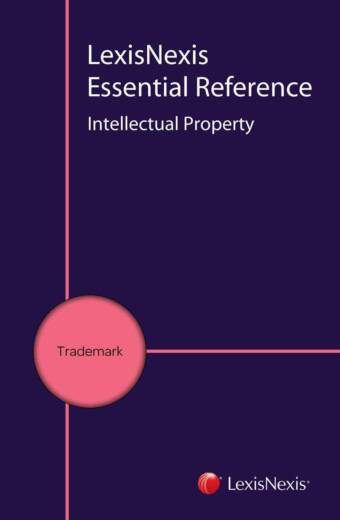
LexisNexis Essential Reference – Intellectual Property (Trademarks)
RM250.00Authors: LexisNexis
Publisher: LexisNexisThe registration of trademarks in Malaysia is governed by the Trade Marks Act 1976 and Trade Marks Regulations 1997. Registration of a trademark conveys exclusive rights to the registered proprietor to use the mark on the goods or services for which the mark is registered. A trademark registration is valid for ten years and it is renewable. A trademark owner can be an individual, business organisation or any legal entity. Any mark proposed to be used in relation to goods or services to indicate a connection in the course of trade between the goods or services and the person having the right to use the mark can be registered.
-

KERLY’S LAW OF TRADE MARKS AND TRADE NAMES,16TH EDITION
ALL PRICES ARE SUBJECT TO CURRENCY FLUCTUATIONS. PLEASE CALL FOR PRICES.
Kerly”s Law of Trade Marks and Trade Names has provided expert guidance on all aspects of UK trade mark law since 1894. Through a mix of insightful commentary and up-to-date analysis of case law and legislation from the UK and Europe, it is the reference for the provision of clear and authoritative advice.
The 16th edition sees a major update with the inclusion of three new chapters on topics including the average consumer, Brexit, and the defining characteristics of trade marks. It also analyses the highly significant European trade mark reforms – the greatest change to trade mark law for 20 years.
- Provides the most comprehensive and authoritative guidance on the law of trade marks and trade names in the United Kingdom
- Explains core topics of trade mark law: classification, registration (UK and European), enforcement, infringement, and litigation
- Detailed analysis of community trade marks, their provisions, extent of protection, and procedural matters
- Covers issues of assignment, licensing, merchandising, and franchising
- Lays out the absolute and relative grounds for the refusal of registration
- Addresses trade mark infringement and outlines a range of defences including limitations on, exclusions from, and statutory.
Some of the key new features of the 16th edition include:
- Explains the changes introduced by the European Trade Mark Reform, analysing the key legislation affecting community trade marks and the owners of national trade marks in the EU.
- A new chapter dedicated to the average consumer identifying relevant characteristics, factors that influence the level of attention, and discussion of where it is (and is not) deployed.
- A new chapter explaining the likely impact of Brexit on registered trade marks which have force in the UK and the effect on owners of EU registered trade marks used primarily in the UK.
- A new chapter addressing the meaning of the expression “trade mark,” outlining its essential functions and characteristics.
-

Copyright Law in Malaysia: Cases and Commentary – 2nd Edition
RM420.00This book provides a full and authoritative analysis of cases, both local and international, on issues concerning copyright, as well as a thorough discussion on important amendments to the copyright law made by the Copyright (Amendment) Act 2012.
Structured in 15 chapters, the book is replete with essential and analytical information on copyright law. Each topic is introduced by a helpful overview before key cases are presented. These local and international cases on copyright law have been carefully selected and are complemented by copious commentaries to elucidate on the wide range of issues that arise. The commentaries which are enlightening, thought-provoking and insightful, assist the reader to have an in-depth and critical understanding of copyright law.
The new changes covered in this new edition include the liability of ISP’s and notice and take down procedure, statutory damages, voluntary notification as well as anti-camcording liability. It also analyses refined provisions on performer’s rights, technological protection measures, the copyright tribunal, the inter-working of copyright and industrial design as well as the various limitations and exceptions provided by law.
-
Copyright Law for Librarians and Educators: Creative Strategies and Practical Solutions, 4th Edition
RM458.70Author: Kenneth D. CrewsISBN 13: 9780838916292Publication Year: 2020
Format: Paperback
Country: USA“Straightforward … a terrific way to teach library students a lot in an easy to read book.”
—Lesley Ellen Harris, author, educator, consultant, Copyrightlaws.com -
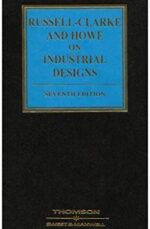
Russell-Clarke and Howe on Industrial Designs, 7th Edition (Good Condition)
RM550.00Author: Martin Howe
Publication Date: 2005
ISBN: 9780421780408
Format: Hardcover -
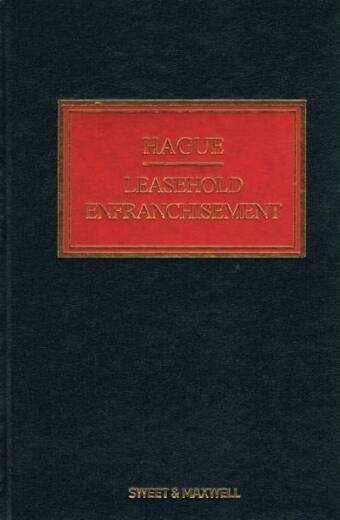
HAGUE LEASEHOLD ENFRANCHISEMENT FIFTH EDITION ( IN GOOD CONDITION )
RM300.00Hague on Leasehold Enfranchisement gives you comprehensive, detailed guidance on each stage of the leasehold enfranchisement process.
Written by Anthony Radevsky and Damian Greenish, Hague sets out the rights and responsibilities of the landlord and tenant, deals with the intricacies of qualification and valuation, and also covers the related areas of mortgages, sub-tenants and trusts. Hague includes full interpretation of relevant legislation, with all applicable statutes and statutory instruments reproduced, to help you to see precisely what the law requires and to take the necessary action.
Fully updated to take account of legal developments, the new edition of Hague:-
- Includes rewritten and updated chapters on valuation
- Considers the extensive reforms and case law resulting from the Commonhold and Leasehold Reform Act 2002
- Provides a rewritten definition of “house” which is applied throughout
- Discusses recent case law including the landmark Court of Appeal decision: Earl Cadogan v Sportelli
- Contains expanded appendices containing new Regulations, the 2006 Lands Tribunal Practice Direction and the new Land Registry Practice Guide
Contents:Acquiring the Freehold: Premises Qualifying, Acquiring the Freehold: Tenancies Qualifying, Acquiring the Freehold: Persons Notices and their Effect, Acquiring the Freehold: Acquisition Terms, Extending the Lease, Extending the Lease: Valuation, Acquiring the Freehold: Valuation, Landlord’s Overriding Rights, Sub-tenants, Rent Charges, Mortgages, Special Classes of Landlord Settlements and Trusts, Court and Tribunal Proceedings, Places of Worship, The Right to Collective Enfranchisement, Premises Qualifying ,Tenancies Qualifying, Qualifying Tenants and Landlords Procedure: Preliminary Inquiries and Initial Notice. Participating Tenants and Nominee Purchaser (The RTE Company and Participation in a Claim)Procedure Following Initial Notice Purchase Price and Terms, Termination or Completion of Claim, The Individual Right to a New Lease ,New Lease: Procedure Termination and Suspension of New Lease Claim, The Grant of the New Lease New Lease: Premium 1993. Act Proceedings Management Schemes,Precedents,Appendices
-

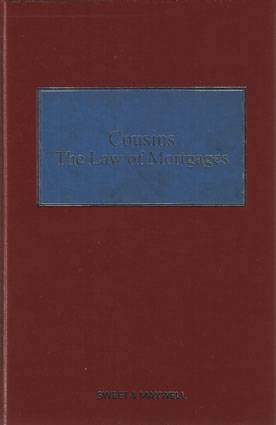
COUSINS THE LAW OF MORTGAGES THIRD EDITION ( IN GOOD CONDITION )
RM500.00Cousins: Law of Mortgages is a comprehensive explanation of the law and practice concerning mortgages and related court proceedings.
Every type of mortgage agreement is covered whilst detailing the rights and duties of the parties involved. The book examines the areas of dispute between mortgagors and mortgagees, setting out available remedies. It also describes the procedures for amending and transferring mortgages.
There have been substantial changes made in the conceptual framework of Cousins: Law of Mortgages, and a re-ordering of the textual format to assist exposition and to reflect the legal developments which have occurred since the previous edition.
The 3rd edition has been substantially updated with a re-ordering of the textual format to assist exposition and reflect the recent legal developments, Law of Mortgages ensures readers are up to date on the latest legal developments including:-
- Bills of Sale Act: Vos J’s detailed analysis in Chapman v Wilson on the application of the Act to future property and the Court of Appeal’s decision in Online Catering Limited v Acton concerning the Acts’ application to companies
- Limitation Periods: Court of Appeal’s decisions in Yorkshire Bank v Mulall (2009) on limitation periods and charging orders and Ashe v Nat West Bank (2008) on delays in enforcement and adverse possession
- Includes a new chapter on Subrogation that explores in depth all the principles applicable to subrogation and mortgage including sub-subrogation and subrogation to the vendor’s lien
- Gives a comprehensive analysis of the law affecting priorities post the Land Registration Act 2002, set against the context of the position under the Land Registration Act 1925 and the previous position covering priorities between and affecting legal and equitable mortgages
- Provides a new chapter dealing with charging orders, the law and practicalities including consideration of recent cases such as Close Invoice Finance v Pil (2008), Forrester Ketley & Co v Brent (2009) and National Westminster Bank plc v Rushmer (2010)
- Contains expanded coverage of insolvency as it affects both mortgagors and mortgagee, the law concerning debentures and the regulation of family property
- Covers in great detail the Consumer Credit Act and the 2010 regulations, with particular focus on the new regime for unfair credit bargains and the Unfair Terms in Consumer Contracts regulations