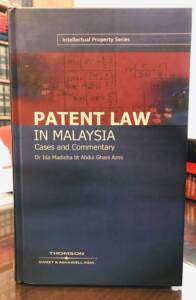
“The grant of patent in Malaysia is governed by the Patent Act 1983 and the Patents Regulations 1986 which came into force on 1 October 1986. These statutes also govern the validity of patent rights for inventions in Malaysia. The Act has repealed the earlier system of registering patents in the UK and re-registering them in Malaysia. The Act provides not only for the grant of patents but also for the grant of ‘petty’ patents which are also known as ‘utility innovations’. This is to cover the ‘lesser’ inventions which may not be covered under the stringent requirements laid down for the grant of a patent. This is to encourage and support creativity in inventions. An applicant must file a patent or utility innovation application with the Intellectual Property Corporation of Malaysia (MyIPO) to secure the grant of a Malaysian patent. This in turn gives the owner protection of the patent or utility innovation and the exclusive right to stop others from manufacturing, using and/or selling the owner’s invention in Malaysia without the owner’s consent or permission. This publication is designed to offer a clear overview of the legislation that governs Patent and seek to explain the legal approach adopted by the courts. The publication includes : Commentaries on defining specific terms within the Act, The commentaries also cross-refer to local and international cases, Relevant local and international legislation, Summary of recent Patent cases This publication will serve as an indispensable guide and an essential reference for intellectual property practitioners specializing in patent, corporate counsel, prosecutors, judges, students, lecturers, as well as researchers.
LexisNexis Essential Reference – Intellectual Property (Patent)
RM250.00
Authors: LexisNexis
Publisher: LexisNexis
The grant of patent in Malaysia is governed by the Patent Act 1983 and the Patents Regulations 1986 which came into force on 1 October 1986. These statutes also govern the validity of patent rights for inventions in Malaysia. The Act has repealed the earlier system of registering patents in the UK and re-registering them in Malaysia. The Act provides not only for the grant of patents but also for the grant of ‘petty’ patents which are also known as ‘utility innovations’. This is to cover the ‘lesser’ inventions which may not be covered under the stringent requirements laid down for the grant of a patent. This is to encourage and support creativity in inventions.
| ISBN | 9789674005689 |
|---|---|
| Authors | LexisNexis |
| Publisher | LexisNexis |
| Pub Date | 2016 |
| Format |
Customer Reviews
There are no reviews yet.
Only logged in customers who have purchased this product may leave a review.
Related products
-

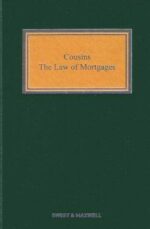
Cousins On The Law of Mortgages 4th ed
RM1,719.00Cousins On Law of Mortgages is a comprehensive explanation of the law and practice concerning mortgages and related court proceedings.
Every type of mortgage agreement is covered, going through the rights and duties of the parties involved. This new edition brings the text up to date with all the latest legislative and case law developments.
- Identifies and examines the areas of dispute between the parties involved
- Discusses remedies available under the mortgage and in court proceedings
- Considers the defences and claims commonly raised by the mortgagor in actions brought by the mortgagee
- Covers the different forms of security
- Discusses insolvency as it affects both mortgagor and mortgagee
- Describes the procedures for amending and transferring mortgages
- Includes a useful selection of forms and precedents
RM1,910.00 -

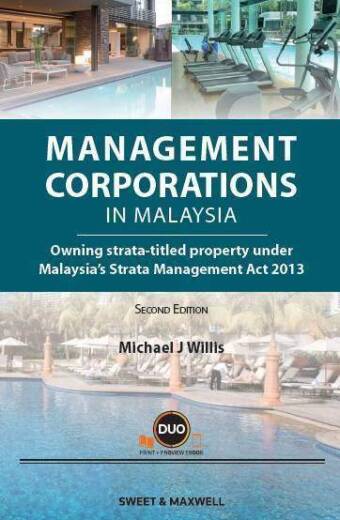
MANAGEMENT CORPORATIONS IN MALAYSIA ( OWNING STRATA-TITLED PROPERTY UNDER MALAYSIA’S STRATA MANAGEMENT ACT 2013 ) SECOND EDITION
RM100.00Management corporations have statutory duties and powers under Malaysia’s strata laws. Owners, on their part, must be engaged to ensure that their investment, lifestyle and financial well-being are protected and enhanced when living in strata developments. This book gives owners the tools to do that. It expresses in as plain a language as possible the meaning of the key provisions of the Strata Management Act 2013 as well as the Regulations and By-Laws made under it.
In this readable book, the author supplements explanations with informed commentary on the implications of the statutory provisions. In the process, numerous specific and practical suggestions are provided on how to improve strata management practice. The analysis and commentary add significant value to the text. Where appropriate, comparisons are also made with the position in jurisdictions outside of Malaysia to discern best practices.
Drawing on his experience as an owner-occupier of a condominium apartment in Kuala Lumpur and his first-hand knowledge of strata living in Malaysia, the author has prepared an engaging guide on the statutory scheme which impacts on management corporations.
This book will greatly benefit strata property owners and prospective owners as well as professional, industry and consumer associations, the broader real estate industry including valuers, property managers and developers, and state and federal land office/department officials.
NEW IN THIS EDITION
- description and discussion of the extensive array of duties and legal obligations of management corporations now enshrined in newly prescribed By-Laws
- description and discussion of the general duties of, and prohibitions placed on, owners and occupiers under newly prescribed By-Laws
- details and analysis of subject matter contained within By-Laws covering renovations, vehicle use, solid waste disposal and maintenance and management of common property
- analysis of new ways under which management committees are to function designed to emphasise greater accountability and transparency in the way they function and make decisions
- inclusion of all prescribed Forms, Notices and Certificates relevant to the day-to-day workings of a management corporation;
- details of new eligibility requirements for those nominating for membership of representative bodies including the opening up of membership of the management committee to non-owners
- analysis of the workings of the Strata Management Tribunal
- special commentaries comparing and contrasting features of Malaysian strata laws with that of overseas jurisdictions including suggestions on how to improve strata management law and practice as well as highlighting omissions and shortcomings
- case studies based on (real life) factual scenarios pertinent to the operations of management corporations; and
- references to relevant case law.
-
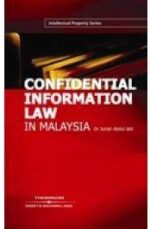
CONFIDENTIAL INFORMATION LAW IN MALAYSIA
RM310.00This publication provides in detail the law of confidential information which protects information including opinions and ideas that are precluded by copyright and other statutory regimes. The law of confidential information provides valuable protection not only to personal, commercial or industrial information but also to governmental or administrative information. This law has its importance particularly in the area of trade secrets and business information and gives protection to information that is not released to the public or part of the public domain. It also provides a basis of action for protection of privacy.
The publication further explains in great detail the aim of the particular area of law concerned, i.e. to act as a safeguard from exploitation of trade secrets, encroachments of privacy, misappropriation of confidential information without just cause and excuse and to protect national security and the government’s integrity. It protects both the owner and its secrets based on an equitable principle, that those who receive confidential information should not take advantage of them to the detriment of the confider or the owner of the information.
The publication also provides commentary on cases pertaining to the subject matter, with reference to the United Kingdom, Malaysia and other relevant jurisdictions.
-
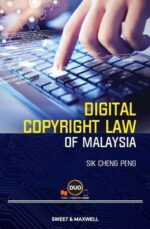
Digital Copyright Law of Malaysia
RM171.00Author: Dr Sik Cheng Peng
Published: Jan 2020
ISBN: 9789672339304
Print & Proview eBookRM190.00 -

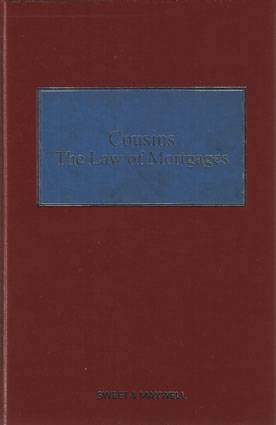
COUSINS THE LAW OF MORTGAGES THIRD EDITION ( IN GOOD CONDITION )
RM500.00Cousins: Law of Mortgages is a comprehensive explanation of the law and practice concerning mortgages and related court proceedings.
Every type of mortgage agreement is covered whilst detailing the rights and duties of the parties involved. The book examines the areas of dispute between mortgagors and mortgagees, setting out available remedies. It also describes the procedures for amending and transferring mortgages.
There have been substantial changes made in the conceptual framework of Cousins: Law of Mortgages, and a re-ordering of the textual format to assist exposition and to reflect the legal developments which have occurred since the previous edition.
The 3rd edition has been substantially updated with a re-ordering of the textual format to assist exposition and reflect the recent legal developments, Law of Mortgages ensures readers are up to date on the latest legal developments including:-
- Bills of Sale Act: Vos J’s detailed analysis in Chapman v Wilson on the application of the Act to future property and the Court of Appeal’s decision in Online Catering Limited v Acton concerning the Acts’ application to companies
- Limitation Periods: Court of Appeal’s decisions in Yorkshire Bank v Mulall (2009) on limitation periods and charging orders and Ashe v Nat West Bank (2008) on delays in enforcement and adverse possession
- Includes a new chapter on Subrogation that explores in depth all the principles applicable to subrogation and mortgage including sub-subrogation and subrogation to the vendor’s lien
- Gives a comprehensive analysis of the law affecting priorities post the Land Registration Act 2002, set against the context of the position under the Land Registration Act 1925 and the previous position covering priorities between and affecting legal and equitable mortgages
- Provides a new chapter dealing with charging orders, the law and practicalities including consideration of recent cases such as Close Invoice Finance v Pil (2008), Forrester Ketley & Co v Brent (2009) and National Westminster Bank plc v Rushmer (2010)
- Contains expanded coverage of insolvency as it affects both mortgagors and mortgagee, the law concerning debentures and the regulation of family property
- Covers in great detail the Consumer Credit Act and the 2010 regulations, with particular focus on the new regime for unfair credit bargains and the Unfair Terms in Consumer Contracts regulations
-
KERLY’S LAW OF TRADE MARKS AND TRADE NAMES,16TH EDITION
ALL PRICES ARE SUBJECT TO CURRENCY FLUCTUATIONS. PLEASE CALL FOR PRICES.
Kerly”s Law of Trade Marks and Trade Names has provided expert guidance on all aspects of UK trade mark law since 1894. Through a mix of insightful commentary and up-to-date analysis of case law and legislation from the UK and Europe, it is the reference for the provision of clear and authoritative advice.
The 16th edition sees a major update with the inclusion of three new chapters on topics including the average consumer, Brexit, and the defining characteristics of trade marks. It also analyses the highly significant European trade mark reforms – the greatest change to trade mark law for 20 years.
- Provides the most comprehensive and authoritative guidance on the law of trade marks and trade names in the United Kingdom
- Explains core topics of trade mark law: classification, registration (UK and European), enforcement, infringement, and litigation
- Detailed analysis of community trade marks, their provisions, extent of protection, and procedural matters
- Covers issues of assignment, licensing, merchandising, and franchising
- Lays out the absolute and relative grounds for the refusal of registration
- Addresses trade mark infringement and outlines a range of defences including limitations on, exclusions from, and statutory.
Some of the key new features of the 16th edition include:
- Explains the changes introduced by the European Trade Mark Reform, analysing the key legislation affecting community trade marks and the owners of national trade marks in the EU.
- A new chapter dedicated to the average consumer identifying relevant characteristics, factors that influence the level of attention, and discussion of where it is (and is not) deployed.
- A new chapter explaining the likely impact of Brexit on registered trade marks which have force in the UK and the effect on owners of EU registered trade marks used primarily in the UK.
- A new chapter addressing the meaning of the expression “trade mark,” outlining its essential functions and characteristics.