“The grant of patent in Malaysia is governed by the Patent Act 1983 and the Patents Regulations 1986 which came into force on 1 October 1986. These statutes also govern the validity of patent rights for inventions in Malaysia. The Act has repealed the earlier system of registering patents in the UK and re-registering them in Malaysia. The Act provides not only for the grant of patents but also for the grant of ‘petty’ patents which are also known as ‘utility innovations’. This is to cover the ‘lesser’ inventions which may not be covered under the stringent requirements laid down for the grant of a patent. This is to encourage and support creativity in inventions. An applicant must file a patent or utility innovation application with the Intellectual Property Corporation of Malaysia (MyIPO) to secure the grant of a Malaysian patent. This in turn gives the owner protection of the patent or utility innovation and the exclusive right to stop others from manufacturing, using and/or selling the owner’s invention in Malaysia without the owner’s consent or permission. This publication is designed to offer a clear overview of the legislation that governs Patent and seek to explain the legal approach adopted by the courts. The publication includes : Commentaries on defining specific terms within the Act, The commentaries also cross-refer to local and international cases, Relevant local and international legislation, Summary of recent Patent cases This publication will serve as an indispensable guide and an essential reference for intellectual property practitioners specializing in patent, corporate counsel, prosecutors, judges, students, lecturers, as well as researchers.
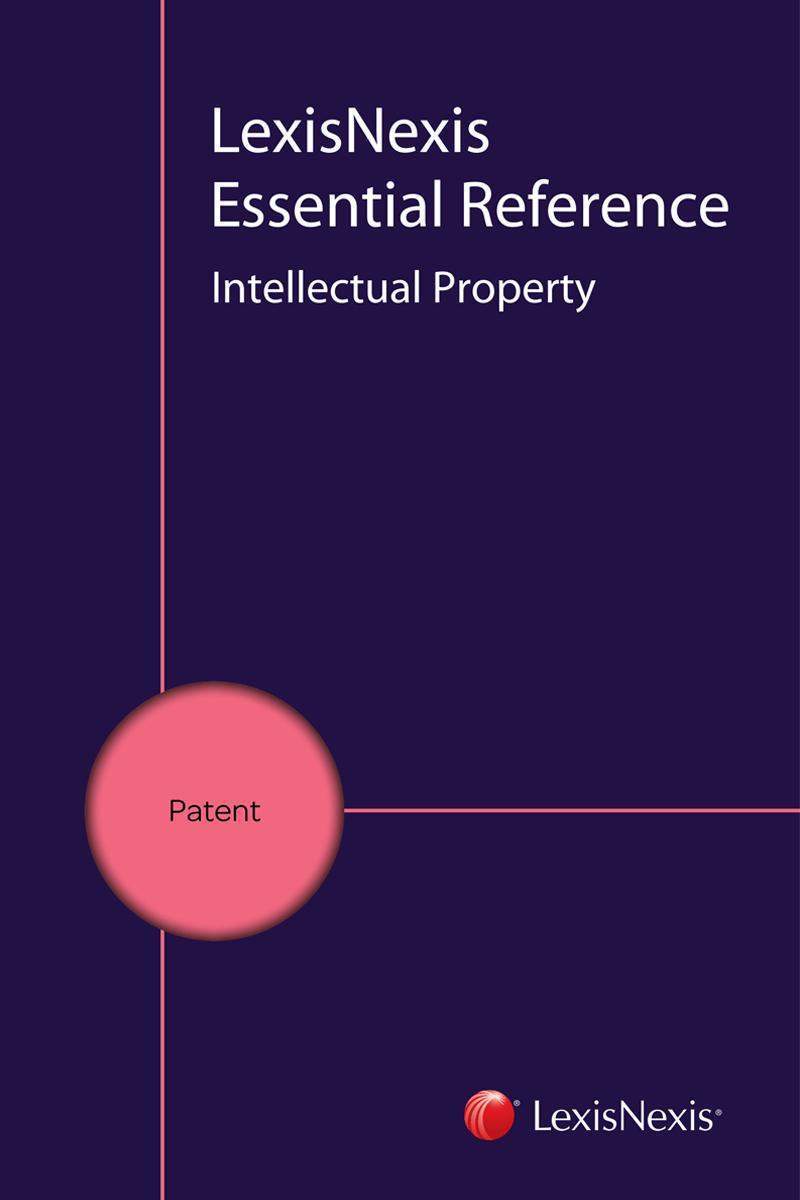
LexisNexis Essential Reference – Intellectual Property (Patent)
RM250.00
Authors: LexisNexis
Publisher: LexisNexis
The grant of patent in Malaysia is governed by the Patent Act 1983 and the Patents Regulations 1986 which came into force on 1 October 1986. These statutes also govern the validity of patent rights for inventions in Malaysia. The Act has repealed the earlier system of registering patents in the UK and re-registering them in Malaysia. The Act provides not only for the grant of patents but also for the grant of ‘petty’ patents which are also known as ‘utility innovations’. This is to cover the ‘lesser’ inventions which may not be covered under the stringent requirements laid down for the grant of a patent. This is to encourage and support creativity in inventions.
| ISBN | 9789674005689 |
|---|---|
| Authors | LexisNexis |
| Publisher | LexisNexis |
| Pub Date | 2016 |
| Format |
Customer Reviews
There are no reviews yet.
Only logged in customers who have purchased this product may leave a review.
Related products
-

TRADEMARKS ACT 2019 WITH OVERVIEW BY INDRAN SHANMUGANATHAN
RM170.00The Trademarks Act 2019 came into force on December 27, 2019 and has repealed the Trade Marks Act 1976. This publication presents the full text of the Trademarks Act 2019 and the Trademarks Regulations 2019.
To facilitate understanding of the new legislation, the author has provided an expert overview which highlights the following salient features of the new Act:
Greater clarity on the registration of non-traditional trademarks;
The registration of collective marks;
Removal of the concepts of defensive trademarks and associated trademarks;
Multi-class filings, divisions and mergers of applications previously unavailable under the Trademarks Act 1976;
Greater clarity on the examination of trademarks;
New provisions on opposition and appeal procedures;
Rearrangement of the provisions pertaining to cancellation actions;
Illuminates the provisions pertaining to trademark infringement, including acts amounting to infringement, secondary liability, usage of signs, available defences and procedures and remedies (including the new remedy for groundless threat of infringement proceedings);
Criminal offences relating to trademark infringement (previously found under the Trade Descriptions Act 2011) are now consolidated and provided for under the Trademarks Act 2019;
Commercialisation of trademarks;
New provisions pertaining to the role and administrative procedure of trademark agents.
The overview is written by an expert and seasoned practitioner with vast knowledge and experience on matters relating to Intellectual Property law, who was accorded the accolade of the Asialaw Regional Award 2019 for Outstanding Practitioner in Malaysia.This publication is an essential source for lawyers, all Intellectual Property practitioners, academics and students of law, and is invaluable in facilitating a good understanding of the new statutory regime regulating trademarks and related practices in Malaysia.
-
TRADEMARKS ACT 2019 : ACT 815, TRADEMARKS REGULATIONS 2019 P.U.(A) 373/2019 AS AT 10 JANUARY 2020
RM50.00The Trademarks Act 2019 [Act 815] and the Trademarks Regulations 2019 PU(A) 373/2019 has created a major impact on the rules and procedures affecting the said subject matter. This exclusive combined edition of the Act and Regulations caters as a handy-tool of reference for practitioners and those in its related field.
-

Ambush Marketing and Brand Protection Law and Practice Second Edition
RM870.00ALL PRICES ARE SUBJECT TO CURRENCY FLUCTUATION. PLEASE CALL IN FOR PRICES.
- The only book specifically focussed on the protection of major event sponsorship and laws to control ambush marketing
- Detailed treatment of the laws relating to ambush marketing in the UK and other jurisdictions including the US, Australia, New Zealand, Canada and South Africa, as well as some European countries
- Invaluable guidance for brand owners and their legal advisors on how to protect their brand and their investment in sponsoring major events
New to this Edition:
- New chapter examining the principles and common clauses in sponsorship contracts as well as the differing types of sponsorship relationship
- Covers recent developments including concerns about the distinctiveness of marks such as ‘WORLD CUP’ and ‘LONDON 2012’
- Considers recent cases relating to the filing of marks in bad faith, trade mark use, the meaning of taking ‘unfair advantage’ and the meaning of ‘detriment’ in relation to dilution
- New section on the Company Names Adjudicator
- Increased geographical coverage
Ambush marketing is any attempt to create an unauthorised or false association with an event thereby interfering with the legitimate contractual rights of the event’s official marketing partners. Looking at both traditional intellectual property rights (such as trade marks, copyright and designs) as they relate to sporting events, and event-specific legislation (such as that of the Olympics), this book gives comprehensive and detailed coverage of ambush marketing. Also considered are the areas of law which can be used to prevent ambush marketing by intrusion (such as laws to prevent fly postering, street trading, the placing of posters and billboards, and control of aerial space). With the United Kingdon hosting three major events; the Olympic and Paralympic Games in 2012; the Commonwealth Games in 2014; and the Rugby World Cup in 2015, this new edition provides a timely and topical update on the area. A materials section is included providing ‘ambush marketing’ specific legislation both in the UK and other countries.
Table of Contents
Part A – Ambush Marketing, Concepts, Developments, and Incidents
1:Ambush Marketing
2:The Evolution of Ambush Marketing Laws
Part B- Ambush Marketing: United Kingdom and European Union Law
3:Trade Marks and Merchandising
4:Passing Off, Copyright, and Decisions and Related Rights
5:Symbols and Emblems
6:Sui Generis Protection against Ambush Marketing By Association
7:Licensing, Broadcasting, and Exhaustion
8:Advertising and Trade Regulation
9:Selling Tickets or Using them for Promotional Purposes
10:Civil and Criminal Proceedings and Border Control
Part C: Ambush Marketing: Laws around the World
11:Australia
12:Canada
13:New Zealand
14:South Africa
15:United States -

The Annotated Trademarks Act 2019
RM250.00he introduction of the Trademarks Act 2019 to pave the way for Malaysia to join the Madrid Protocol saw the repeal of the Trademarks Act 1976. The implementation of the Trademarks Act 2019 is a major change to the Malaysian trademark regime, bringing it in line with the trademark statutes in other major jurisdictions including the UK and Singapore. This publication, The Annotated Trademarks Act 2019, provides invaluable section-by-section annotations to the Trademarks Act 2019, throwing light on the application and interpretation of the provisions of the Act. It is certainly a resource which will greatly assist in the understanding and application of the new trademark system in Malaysia.
The key terms and phrases in each section are explained by reference to local and foreign case law as well as academic writing. This publication facilitates quick and easy research with the inclusion of cross-reference from the provision being annotated to comparative provisions from other jurisdictions. The annotations should prove to be very useful for lawyers, judges, trademarks agents, court officers and law students. Written by a legal practitioner with vast knowledge and experience on matters relating to Intellectual Property Law and who was accorded the accolade of the Asia law Regional Award 2019 for Outstanding Practitioner in Malaysia, there is no doubt this publication will serve as an excellent reference which is insightful, practical, authoritative and enabling a confident understanding of the workings of the Act.
Key Features
- Section-by-section annotations to the Trademarks Act written in simple and straightforward style.
- Annotations supported by copious citation of case authorities.
- Procedural requirements stipulated by the Trademarks Regulations are included to supplement the workings of the Act.
- All defined terms are identified with direct cross-references to the provision where each definition is found.
- Comparative provisions from Singapore, UK and Australia Trademark statutes are provided where available to aid further research.
- Clear page guides assist the user to locate a specific provision or Part of the Act quickly and efficiently.
- Supplemented by detailed index for easy access to the annotations.
- Includes the full text of the Trademarks Regulations 2019
-
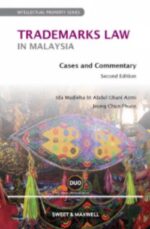
Trademarks Law in Malaysia Cases and Commentary – 2nd Edition
RM344.00Trademarks Law in Malaysia: Cases and Commentary, Second Edition is a revamped edition from the first book which was published in 2003. It continues to provide a comprehensive overview on the development, economic rationale as well as the role and functions of the trademark system in Malaysia. The book examines the registrability of trademarks, discusses the issues in trademark registration, explores the process of trademark application, and deals with the issues of trademark infringement as well as passing off. The authors also describe the types of remedies available to a trademark owner in the instance of unlawful use of his trademark, explain the issues on revocation of trademarks and elaborate on the concept of well-known marks.
This updated edition highlights the changes under the new Trademarks Act 2019, repealing the old Trade Marks Act 1976, including the reinforcement that a trademark is a proprietary right, and the criteria of being a well-known trademark under the new Act through decided cases.
Written by two expert authors who are well-acquainted with the subject of trademarks law through academic and practical experience, this book should be a useful reference to legal practitioners, intellectual property consultants, trademark agents, academicians and students, supplementing other materials on the subject of trademark law in Malaysia.
RM380.00 -
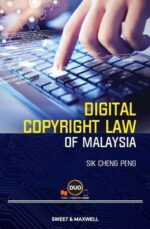
Digital Copyright Law of Malaysia
RM171.00Author: Dr Sik Cheng Peng
Published: Jan 2020
ISBN: 9789672339304
Print & Proview eBookRM190.00 -
ATTACHMENT OF PROPERTY AND ITS REMOVAL
RM131.30* 1 COPY LEFT
When Court can issue order at Attachment of Property of absconding person under Section 83 of Cr PC?
Moreover in order to issue an order of attachment of property of person absconding under Section 83 of the Cr PC, the Court issuing a proclamation under section of the Cr PC may for reasons to be recorded in writing at any time after the issue of the proclamation, order the attachment of any property movable or immovable, or both belonging to the proclaimed person, provided that the Court is satisfied that the person in relation to whom the proclamation is to be issued; (a) is about to dispose of the whole or any part, of his property or (b) is about to remove the whole or any part of his property from the local jurisdiction of the Court. Only on satisfaction of such condition, the Court may order the attachment simultaneously with the issue of the proclamation.