“The grant of patent in Malaysia is governed by the Patent Act 1983 and the Patents Regulations 1986 which came into force on 1 October 1986. These statutes also govern the validity of patent rights for inventions in Malaysia. The Act has repealed the earlier system of registering patents in the UK and re-registering them in Malaysia. The Act provides not only for the grant of patents but also for the grant of ‘petty’ patents which are also known as ‘utility innovations’. This is to cover the ‘lesser’ inventions which may not be covered under the stringent requirements laid down for the grant of a patent. This is to encourage and support creativity in inventions. An applicant must file a patent or utility innovation application with the Intellectual Property Corporation of Malaysia (MyIPO) to secure the grant of a Malaysian patent. This in turn gives the owner protection of the patent or utility innovation and the exclusive right to stop others from manufacturing, using and/or selling the owner’s invention in Malaysia without the owner’s consent or permission. This publication is designed to offer a clear overview of the legislation that governs Patent and seek to explain the legal approach adopted by the courts. The publication includes : Commentaries on defining specific terms within the Act, The commentaries also cross-refer to local and international cases, Relevant local and international legislation, Summary of recent Patent cases This publication will serve as an indispensable guide and an essential reference for intellectual property practitioners specializing in patent, corporate counsel, prosecutors, judges, students, lecturers, as well as researchers.
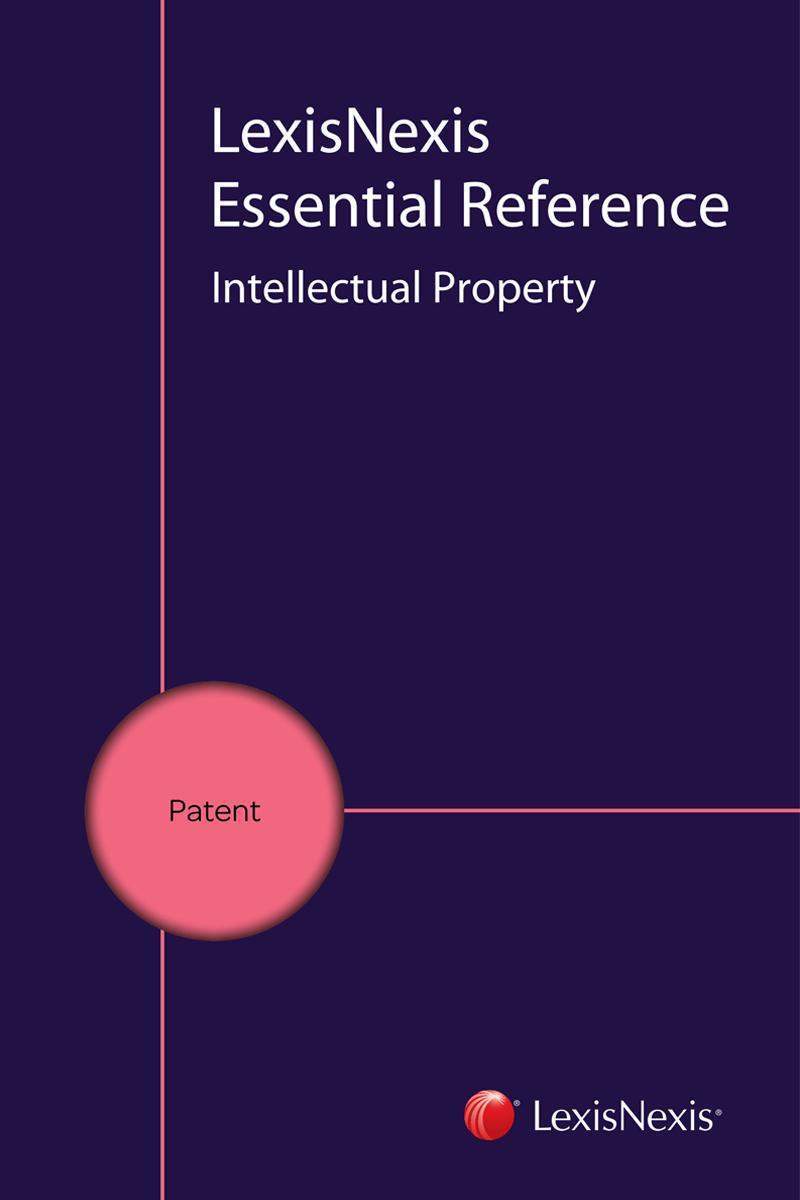
LexisNexis Essential Reference – Intellectual Property (Patent)
RM250.00
Authors: LexisNexis
Publisher: LexisNexis
The grant of patent in Malaysia is governed by the Patent Act 1983 and the Patents Regulations 1986 which came into force on 1 October 1986. These statutes also govern the validity of patent rights for inventions in Malaysia. The Act has repealed the earlier system of registering patents in the UK and re-registering them in Malaysia. The Act provides not only for the grant of patents but also for the grant of ‘petty’ patents which are also known as ‘utility innovations’. This is to cover the ‘lesser’ inventions which may not be covered under the stringent requirements laid down for the grant of a patent. This is to encourage and support creativity in inventions.
| ISBN | 9789674005689 |
|---|---|
| Authors | LexisNexis |
| Publisher | LexisNexis |
| Pub Date | 2016 |
| Format |
Customer Reviews
There are no reviews yet.
Only logged in customers who have purchased this product may leave a review.
Related products
-

MANAGEMENT CORPORATIONS IN MALAYSIA ( OWNING STRATA-TITLED PROPERTY UNDER MALAYSIA’S STRATA MANAGEMENT ACT 2013 ) SECOND EDITION
RM100.00Management corporations have statutory duties and powers under Malaysia’s strata laws. Owners, on their part, must be engaged to ensure that their investment, lifestyle and financial well-being are protected and enhanced when living in strata developments. This book gives owners the tools to do that. It expresses in as plain a language as possible the meaning of the key provisions of the Strata Management Act 2013 as well as the Regulations and By-Laws made under it.
In this readable book, the author supplements explanations with informed commentary on the implications of the statutory provisions. In the process, numerous specific and practical suggestions are provided on how to improve strata management practice. The analysis and commentary add significant value to the text. Where appropriate, comparisons are also made with the position in jurisdictions outside of Malaysia to discern best practices.
Drawing on his experience as an owner-occupier of a condominium apartment in Kuala Lumpur and his first-hand knowledge of strata living in Malaysia, the author has prepared an engaging guide on the statutory scheme which impacts on management corporations.
This book will greatly benefit strata property owners and prospective owners as well as professional, industry and consumer associations, the broader real estate industry including valuers, property managers and developers, and state and federal land office/department officials.
NEW IN THIS EDITION
- description and discussion of the extensive array of duties and legal obligations of management corporations now enshrined in newly prescribed By-Laws
- description and discussion of the general duties of, and prohibitions placed on, owners and occupiers under newly prescribed By-Laws
- details and analysis of subject matter contained within By-Laws covering renovations, vehicle use, solid waste disposal and maintenance and management of common property
- analysis of new ways under which management committees are to function designed to emphasise greater accountability and transparency in the way they function and make decisions
- inclusion of all prescribed Forms, Notices and Certificates relevant to the day-to-day workings of a management corporation;
- details of new eligibility requirements for those nominating for membership of representative bodies including the opening up of membership of the management committee to non-owners
- analysis of the workings of the Strata Management Tribunal
- special commentaries comparing and contrasting features of Malaysian strata laws with that of overseas jurisdictions including suggestions on how to improve strata management law and practice as well as highlighting omissions and shortcomings
- case studies based on (real life) factual scenarios pertinent to the operations of management corporations; and
- references to relevant case law.
-

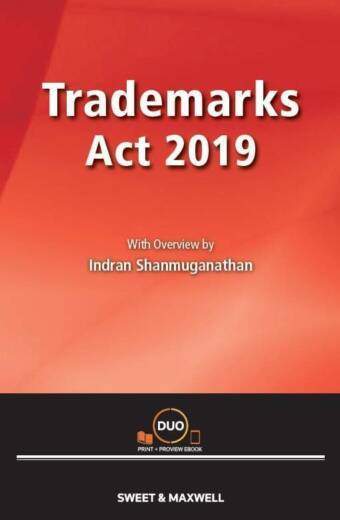
TRADEMARKS ACT 2019 WITH OVERVIEW BY INDRAN SHANMUGANATHAN
RM170.00The Trademarks Act 2019 came into force on December 27, 2019 and has repealed the Trade Marks Act 1976. This publication presents the full text of the Trademarks Act 2019 and the Trademarks Regulations 2019.
To facilitate understanding of the new legislation, the author has provided an expert overview which highlights the following salient features of the new Act:
Greater clarity on the registration of non-traditional trademarks;
The registration of collective marks;
Removal of the concepts of defensive trademarks and associated trademarks;
Multi-class filings, divisions and mergers of applications previously unavailable under the Trademarks Act 1976;
Greater clarity on the examination of trademarks;
New provisions on opposition and appeal procedures;
Rearrangement of the provisions pertaining to cancellation actions;
Illuminates the provisions pertaining to trademark infringement, including acts amounting to infringement, secondary liability, usage of signs, available defences and procedures and remedies (including the new remedy for groundless threat of infringement proceedings);
Criminal offences relating to trademark infringement (previously found under the Trade Descriptions Act 2011) are now consolidated and provided for under the Trademarks Act 2019;
Commercialisation of trademarks;
New provisions pertaining to the role and administrative procedure of trademark agents.
The overview is written by an expert and seasoned practitioner with vast knowledge and experience on matters relating to Intellectual Property law, who was accorded the accolade of the Asialaw Regional Award 2019 for Outstanding Practitioner in Malaysia.This publication is an essential source for lawyers, all Intellectual Property practitioners, academics and students of law, and is invaluable in facilitating a good understanding of the new statutory regime regulating trademarks and related practices in Malaysia.
-
ATTACHMENT OF PROPERTY AND ITS REMOVAL
RM131.30* 1 COPY LEFT
When Court can issue order at Attachment of Property of absconding person under Section 83 of Cr PC?
Moreover in order to issue an order of attachment of property of person absconding under Section 83 of the Cr PC, the Court issuing a proclamation under section of the Cr PC may for reasons to be recorded in writing at any time after the issue of the proclamation, order the attachment of any property movable or immovable, or both belonging to the proclaimed person, provided that the Court is satisfied that the person in relation to whom the proclamation is to be issued; (a) is about to dispose of the whole or any part, of his property or (b) is about to remove the whole or any part of his property from the local jurisdiction of the Court. Only on satisfaction of such condition, the Court may order the attachment simultaneously with the issue of the proclamation.
-
Malaysian Specialist Intellectual Property and Construction Courts: Practice & Procedure
RM200.00- Publication Date : Dec – 2020
- Author : Dato Lim Chong Fong
- ISBN : 9789672919162
- Format : Hardcover + eBook
- Country : Malaysia
-
INTELLECTUAL PROPERTY : PATENTS, COPYRIGHT, TRADE MARKS AND ALLIED RIGHTS SEVENTH EDITION ( IN FAIR CONDITION )
RM262.00Cornish & Llewelyn’s Intellectual Property has developed a reputation amongst IP academics and practitioners as an accurate, straight forward in depth guide to every aspect of Intellectual Property law. For the student the analysis of every area guides the reader whilst prompting questions and issues for the reader to develop further. As a “flip and find” practitioner reference work IP professionals will rarely allow their copy to gather dust.
-
HAGUE LEASEHOLD ENFRANCHISEMENT FIFTH EDITION ( IN GOOD CONDITION )
RM300.00Hague on Leasehold Enfranchisement gives you comprehensive, detailed guidance on each stage of the leasehold enfranchisement process.
Written by Anthony Radevsky and Damian Greenish, Hague sets out the rights and responsibilities of the landlord and tenant, deals with the intricacies of qualification and valuation, and also covers the related areas of mortgages, sub-tenants and trusts. Hague includes full interpretation of relevant legislation, with all applicable statutes and statutory instruments reproduced, to help you to see precisely what the law requires and to take the necessary action.
Fully updated to take account of legal developments, the new edition of Hague:-
- Includes rewritten and updated chapters on valuation
- Considers the extensive reforms and case law resulting from the Commonhold and Leasehold Reform Act 2002
- Provides a rewritten definition of “house” which is applied throughout
- Discusses recent case law including the landmark Court of Appeal decision: Earl Cadogan v Sportelli
- Contains expanded appendices containing new Regulations, the 2006 Lands Tribunal Practice Direction and the new Land Registry Practice Guide
Contents:Acquiring the Freehold: Premises Qualifying, Acquiring the Freehold: Tenancies Qualifying, Acquiring the Freehold: Persons Notices and their Effect, Acquiring the Freehold: Acquisition Terms, Extending the Lease, Extending the Lease: Valuation, Acquiring the Freehold: Valuation, Landlord’s Overriding Rights, Sub-tenants, Rent Charges, Mortgages, Special Classes of Landlord Settlements and Trusts, Court and Tribunal Proceedings, Places of Worship, The Right to Collective Enfranchisement, Premises Qualifying ,Tenancies Qualifying, Qualifying Tenants and Landlords Procedure: Preliminary Inquiries and Initial Notice. Participating Tenants and Nominee Purchaser (The RTE Company and Participation in a Claim)Procedure Following Initial Notice Purchase Price and Terms, Termination or Completion of Claim, The Individual Right to a New Lease ,New Lease: Procedure Termination and Suspension of New Lease Claim, The Grant of the New Lease New Lease: Premium 1993. Act Proceedings Management Schemes,Precedents,Appendices
-
Trademarks Law in Malaysia Cases and Commentary – 2nd Edition
RM344.00Trademarks Law in Malaysia: Cases and Commentary, Second Edition is a revamped edition from the first book which was published in 2003. It continues to provide a comprehensive overview on the development, economic rationale as well as the role and functions of the trademark system in Malaysia. The book examines the registrability of trademarks, discusses the issues in trademark registration, explores the process of trademark application, and deals with the issues of trademark infringement as well as passing off. The authors also describe the types of remedies available to a trademark owner in the instance of unlawful use of his trademark, explain the issues on revocation of trademarks and elaborate on the concept of well-known marks.
This updated edition highlights the changes under the new Trademarks Act 2019, repealing the old Trade Marks Act 1976, including the reinforcement that a trademark is a proprietary right, and the criteria of being a well-known trademark under the new Act through decided cases.
Written by two expert authors who are well-acquainted with the subject of trademarks law through academic and practical experience, this book should be a useful reference to legal practitioners, intellectual property consultants, trademark agents, academicians and students, supplementing other materials on the subject of trademark law in Malaysia.
RM380.00