| Author: | Ida Madieha bt. Abdul Ghani Azmi. |
|---|---|
| Series: | Intellectual property series |
| Edition/Format: |  Print book : English Print book : English |
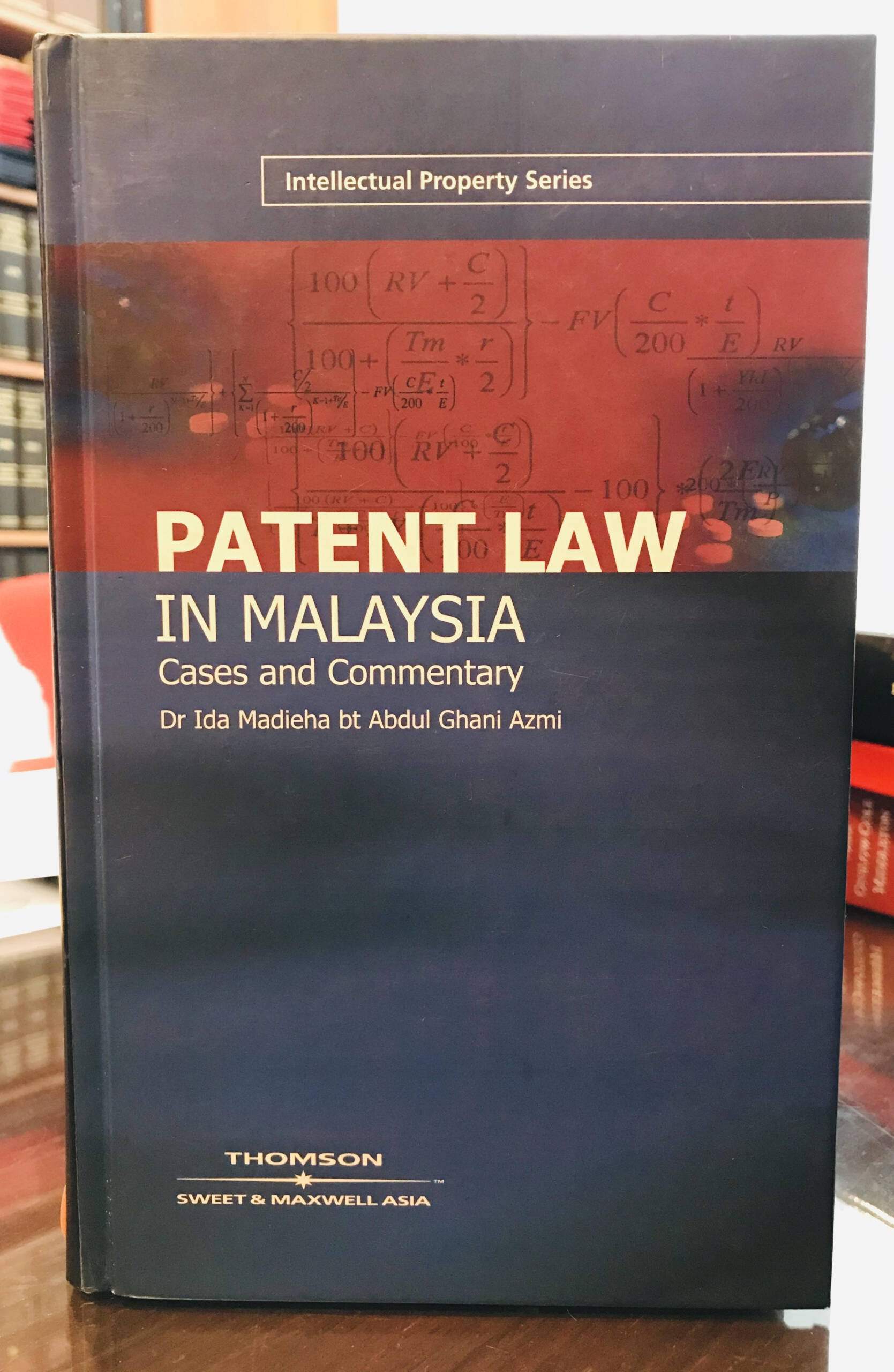
PATENT LAW IN MALAYSIA ( CASES AND COMMENTARY ) ( IN GOOD CONDITION )
RM310.00
Customer Reviews
There are no reviews yet.
Only logged in customers who have purchased this product may leave a review.
Related products
-

Cousins On The Law of Mortgages 4th ed
RM1,719.00Cousins On Law of Mortgages is a comprehensive explanation of the law and practice concerning mortgages and related court proceedings.
Every type of mortgage agreement is covered, going through the rights and duties of the parties involved. This new edition brings the text up to date with all the latest legislative and case law developments.
- Identifies and examines the areas of dispute between the parties involved
- Discusses remedies available under the mortgage and in court proceedings
- Considers the defences and claims commonly raised by the mortgagor in actions brought by the mortgagee
- Covers the different forms of security
- Discusses insolvency as it affects both mortgagor and mortgagee
- Describes the procedures for amending and transferring mortgages
- Includes a useful selection of forms and precedents
RM1,910.00 -
Terrell on the Law of Patents, 20th Edition with 1st Supplement
RM3,879.00Edited by: Douglas Campbell KC, Tom Hinchcliffe KC, Tom Mitcheson KC, Andrew Waugh KC, Tim Austin
ISBN13:9780414130319Published: May 2025Country of Publication: UKFormat: HardbackRM4,310.00 -
Digital Copyright Law of Malaysia
RM171.00Author: Dr Sik Cheng Peng
Published: Jan 2020
ISBN: 9789672339304
Print & Proview eBookRM190.00 -

COUSINS THE LAW OF MORTGAGES THIRD EDITION ( IN GOOD CONDITION )
RM500.00Cousins: Law of Mortgages is a comprehensive explanation of the law and practice concerning mortgages and related court proceedings.
Every type of mortgage agreement is covered whilst detailing the rights and duties of the parties involved. The book examines the areas of dispute between mortgagors and mortgagees, setting out available remedies. It also describes the procedures for amending and transferring mortgages.
There have been substantial changes made in the conceptual framework of Cousins: Law of Mortgages, and a re-ordering of the textual format to assist exposition and to reflect the legal developments which have occurred since the previous edition.
The 3rd edition has been substantially updated with a re-ordering of the textual format to assist exposition and reflect the recent legal developments, Law of Mortgages ensures readers are up to date on the latest legal developments including:-
- Bills of Sale Act: Vos J’s detailed analysis in Chapman v Wilson on the application of the Act to future property and the Court of Appeal’s decision in Online Catering Limited v Acton concerning the Acts’ application to companies
- Limitation Periods: Court of Appeal’s decisions in Yorkshire Bank v Mulall (2009) on limitation periods and charging orders and Ashe v Nat West Bank (2008) on delays in enforcement and adverse possession
- Includes a new chapter on Subrogation that explores in depth all the principles applicable to subrogation and mortgage including sub-subrogation and subrogation to the vendor’s lien
- Gives a comprehensive analysis of the law affecting priorities post the Land Registration Act 2002, set against the context of the position under the Land Registration Act 1925 and the previous position covering priorities between and affecting legal and equitable mortgages
- Provides a new chapter dealing with charging orders, the law and practicalities including consideration of recent cases such as Close Invoice Finance v Pil (2008), Forrester Ketley & Co v Brent (2009) and National Westminster Bank plc v Rushmer (2010)
- Contains expanded coverage of insolvency as it affects both mortgagors and mortgagee, the law concerning debentures and the regulation of family property
- Covers in great detail the Consumer Credit Act and the 2010 regulations, with particular focus on the new regime for unfair credit bargains and the Unfair Terms in Consumer Contracts regulations
-
ATTACHMENT OF PROPERTY AND ITS REMOVAL
RM131.30* 1 COPY LEFT
When Court can issue order at Attachment of Property of absconding person under Section 83 of Cr PC?
Moreover in order to issue an order of attachment of property of person absconding under Section 83 of the Cr PC, the Court issuing a proclamation under section of the Cr PC may for reasons to be recorded in writing at any time after the issue of the proclamation, order the attachment of any property movable or immovable, or both belonging to the proclaimed person, provided that the Court is satisfied that the person in relation to whom the proclamation is to be issued; (a) is about to dispose of the whole or any part, of his property or (b) is about to remove the whole or any part of his property from the local jurisdiction of the Court. Only on satisfaction of such condition, the Court may order the attachment simultaneously with the issue of the proclamation.
-
Intellectual Property Law in Malaysia, 2nd Edition
RM342.00This book is a detailed work that gives a distinctively Malaysian account of the six areas of law that are conventionally accepted as falling under the rubric of intellectual property: the law of passing off, registered trademarks, copyright, patents, registered industrial designs and confidential information. It provides a basic but comprehensive account of the substantive rules that govern these areas of intellectual property law, with the focus being essentially on the Malaysian position. In treating intellectual property law as a coherent whole, this book enables the inter-relationship and the similarities that exist between the different areas to be better appreciated.In addition to the thorough survey of local law, references have been made to case law from foreign jurisdictions where uncertainties arise in the local position. This provides a different perspective on possible approaches that may be applicable in addressing the local issues. In the areas which are governed by statutes, an outline of the historical background, justifications for protection and the international influences that have shaped those areas are provided so as to convey a better understanding of the nature of the law of intellectual property.Written by an experienced teacher and researcher of intellectual property law, this book provides clear analysis and discussion of the law, supported by copious citation of authorities. This new edition is fully up to date, taking into account new case law and statutory developments.New in this editionAnalyses the legislative and judicial developments in Malaysian intellectual property law since the first edition of the book.Incorporates key developments in the international protection of intellectual property.Details the progress of the ASEAN Intellectual Property Cooperation.Explains the trademark registration process under the Madrid Protocol.Includes new chapters on registered trademark law under the Trademarks Act 2019.Discusses the scope of the Copyright (Amendment) Act 2020 and judicial decisions that clarify important copyright principles.Highlights the impact of significant patent law decisions handed down by the Federal Court and the Court of Appeal.Contains ProView Extra materials available exclusively in ProView eBook only.RM380.00 -
Malaysian Specialist Intellectual Property and Construction Courts: Practice & Procedure
RM200.00- Publication Date : Dec – 2020
- Author : Dato Lim Chong Fong
- ISBN : 9789672919162
- Format : Hardcover + eBook
- Country : Malaysia
-

LexisNexis Essential Reference – Intellectual Property (Trademarks)
RM250.00Authors: LexisNexis
Publisher: LexisNexisThe registration of trademarks in Malaysia is governed by the Trade Marks Act 1976 and Trade Marks Regulations 1997. Registration of a trademark conveys exclusive rights to the registered proprietor to use the mark on the goods or services for which the mark is registered. A trademark registration is valid for ten years and it is renewable. A trademark owner can be an individual, business organisation or any legal entity. Any mark proposed to be used in relation to goods or services to indicate a connection in the course of trade between the goods or services and the person having the right to use the mark can be registered.