This text gives a picture of the role and duties of the expert witness both in the UK and in seven other jurisdictions. With articles and chapters from leading practitioners around the world, it looks at the role of the expert in different disciplines and jurisdictions, examining topical issues.
The Expert in Litigation and Arbitration
RM1,530.00
By: D. Mark Cato
ISBN13: 9781859786628
ISBN: 1859786626
Published: September 1999
Country of Publication: UK
Format: Hardback
Customer Reviews
There are no reviews yet.
Only logged in customers who have purchased this product may leave a review.
Related products
-

Electronic Evidence in Malaysia: Admissibility and Discovery
RM198.00Set against the backdrop of a fictional murder, this book presents the law and procedure on electronic evidence and E-Discovery in a uniquely refreshing style. Each chapter takes up a thread from the story, as it delves into the study of the authenticity and discovery of potential digital evidence captured from various electronic sources.
The first part of the book deals exhaustively with how to authenticate evidence obtained from diverse electronic sources to be presented as evidence at trial. The second part discusses the right to obtain discovery of such evidence in its electronic format and the attendant issues and challenges in the process.
The current Malaysian statutory provisions and a wealth of case law from Malaysia, Singapore, England and the USA are analysed to give the reader a better perspective and understanding of this fast-growing and complex area of the law of evidence. The book concludes with a peek into the future and the new lawyering skills that it entails. It is a must-have companion for judges, judicial officers and litigators.
Key Features
- Explanation of the basics of information technology, authenticity and admissibility of electronic evidence and the nascent concept of electronic discovery (E-Discovery) from multifarious potential sources.
- Specific chapters providing guidance on sourcing and authenticating particular forms of electronically stored information (ESI) for admissibility, ranging from emails, text messages, social media, digital audio, image and video recordings especially in the age of Deep Fakes, IoT and AI.
- Consideration of the presumption of reliability of machines and software programes and the case of R v Seema Misra
- Analysis of section 90A of the Evidence Act 1950 in relation to authentication of electronic evidence with numerous case examples.
- General principles of “Discovery” under Order 24 Rules of Court 2012, its application to E-Discovery and the attendant challenges within the ambit of the Rules.
- The ethical implications and consequences of failure to preserve data.
- Use of computer forensics in E-Discovery cases.
- Discussion on when and how to establish an appropriate legal hold to preserve evidence.
- Guidance on the importance of retention and preservation of ESI.
- Latest cases on “Persons Unknown” Proprietary Orders.
- A wealth of cases from Malaysia, Singapore, England and the USA providing guidance on complex issues related to authentication and the nascent area of E-Discovery.
- Proposed guidelines for E-Discovery.
RM220.00 -
-

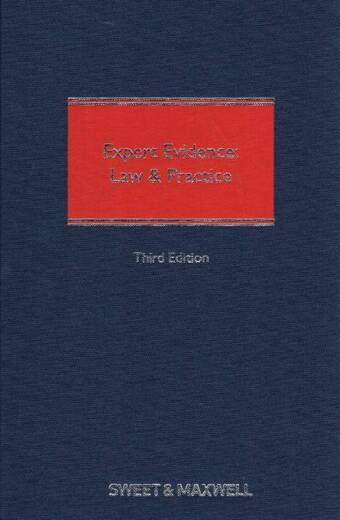
EXPERT EVIDENCE : LAW & PRACTICE THIRD EDITION (Asian Reprint)
RM600.00Covering both civil and criminal proceedings, Expert Evidence: Law and Practice:-
- Provides comprehensive coverage ofexpert evidence in courts, tribunals,official enquiries and other proceedings, including arbitration
- Sets out general principles and deals with the application of those principles in specific context Provides guidance on pre-trial preparation of expert evidence
- Deals with every aspect of the expert witness in court
- Goes through methods of cross-examining experts
- Looks individually at areas such as forensic science, psychiatric evidence, valuation of land and buildings, and evidence with a mathematical element
- Discusses the rules that apply in specific fields of litigation, such as medical reports in personal injury cases, patents, construction claims, proceedings involving children and drunk-driving cases
- Looks at tribunals not covered by the strict rules of evidence
- Quotes in full all important statutory provisions and rules of the court
Coverage in this edition includes:-
- Meadow v General Medical Council
- Reforms embodied in new Part 33 of the Criminal Procedure Rules on expert evidence (including the introduction of single joint experts and pre-trial expert discussions into the criminal process, both of which are significant and controversial changes to criminal procedure)
- A new chapter on bias
- A discussion of the impact of Lord Justice Jackson’s âReview of Civil Litigation Costs’
- New changes to Criminal Procedure Rules
-
PRIVILEGE 4TH EDITION
RM704.00ALL PRICES ARE SUBJECT TO CURRENCY FLUCTUATIONS. PLEASE CALL FOR PRICES.
The fourth edition of this highly practical book examines privilege in all its aspects in terms which will appeal to the practitioner and academic alike. The author’s explanation of the subject is both detailed and analytical, providing the reader with a definitive, comprehensive and expertly written account.
Explains the law of legal advice and litigation privilege in all its aspects
Goes through the core principles of legal professional privilege, including its rationale and the nature of the right
Looks at what constitutes privilege
Identifies situations where privilege occurs
Examines the boundaries of privilege
Covers the circumstances when privilege is deemed to be lost
Considers in detail ‘advice privilege’ and ‘litigation privilege’, covering the essential elements of both, the distinction between the two and matters specific to each such as the client-lawyer relationship, confidential communications and third party communications for ‘advice privilege’, and legal proceedings, expert witnesses, witness statements, and criminal proceedings for ‘litigation proceedings’
Assesses whether a documentary communication which was not made in privileged circumstances can subsequently to subject to legal professional privilege
Deals with the consequences where the subject matter of a privileged communication is one in which two or more persons can establish a joint or common interest
Addresses the general principles underlying the ‘crime-fraud exception’’, how it applies in both civil and criminal proceedings and the grounds on which it can be invoked
Shows how a claim to privilege is made in civil litigation, when it can be challenged, the circumstances in which a court will exercise its right to inspect documents of which the claim to privilege is made and what happens when an order for production is made in respect of materials which are privileged in part only
Takes into account the without prejudice privilege and how it differs from legal professional privilege
Analyses key judgments which have established the principles of privilegeRM782.00 -
HANDWRITING FORENSICS BY B R SHARMA EDITION 2017
RM239.00CONTENTS
1 HANDWRITING FORENSICS
2 DEVELOPMENT OF HANDWRITING
3 HANDWRITING CHARACTERISTICS
4 HANDWRITING IDENTIFICATION PRINCIPLES
5 HANDLING DOCUMENTS
6 DISPUTED DOCUMENTS
7 STANDARDS
8 HANDWRITING FORENSICS PROBLEMS
9 HANDWRITING FORENSICS TOOLS
10 PRELIMINARY EXAMINATION OF DOCUMENTS
11 DOCUMENT PHOTOGRAPHY / DIGITAL IMAGING
12 COMPUTERS IN HANDWRITING FORENSICS
13 EVALUATION PROCESS
14 GENUINE SIGNATURES
15 FORGED SIGNATURES
16 DISGUISE
17 ANONYMOUS AND PSEUDONYMOUS DOCUMENTS
18 PHOTOCOPIES AND HANDWRITING FORENSICS
19 COMPUTERS PRINTERS
20 HANDWRITING FORENSICS REPORTS
21 HANDWRITING FORENSICS IN COURTS
22 CROSS – EXAMINATION
23 RELEVANT LAW
24 CASE LAW
25 DOCUMENPAEDIA -
Law of Evidence: A Commentary
RM449.00Publication Date: Aug – 2020ISBN: 9789672339915Author : Srimurugan AlaganFormat : Hardcover + eBookCountry: Malaysia“This book is a timely and useful addition to the literature on evidence. The insights provided are instructive and will save the readers from spending a lot of time on laborious research.”
From the Foreword byYAA Tan Sri Tengku Maimun binti Tuan MatChief Justice of MalaysiaRM499.00 -
EXPERT EVIDENCE COMPARED ( RULES AND PRACTICES IN THE DUTCH AND AMERICAN CRIMINAL JUSTICE SYSTEM ) ( IN GOOD CONDITION )
RM150.00In modern criminal trials, expert evidence often plays an important role. The question as to the guilt of the defendant is often contingent upon the results of DNA analysis, polygraphs, hair comparisons, and other forensic science techniques. At the same time, through a wide variety of problems inherent to the collection and production of such evidence, the use of expert evidence in criminal litigation is often highly problematical. The vast range of problems that have been identified over the years, and the manifest presence of these problems in some of the more notorious ‘miscarriages of justice’ have made expert evidence one of the most debated topics in legal literature today. Many believe that in this particular field, criminal justice systems are in dire need of legal reform. This study attempts to contribute to this debate through an analysis and comparison of two legal systems that each employ a different method for expert involvement. The study seeks to identify the similarities and differences in how different legal systems deal with expert evidence. Additionally it seeks to establish what the experiences of one country can bring to another for the purpose of enhancing the cornerstone of criminal litigation: the concept of procedural fairness.