The Prevention of Money Laundering Act, 2002, (PMLA, 2002), was conceived as a pathbreaking legislation, the objective of which was to curb the free movement of money not earned legally across the world. The legislation has undergone frequent and substantial amendments ever since its enactment like no other special criminal law in India. In A Commentary on the Prevention of Money Laundering Act, 2002 Anuuj Taandon and Sachin Upadhyay delve into different provisions of PMLA, 2002, to bring before their readers the present position of this substantial law as well as the procedures it involves. Certain subjects of general importance like criminal jurisprudence in India, interpretation of statutes, and scope of amendments have also been included in the book to familiarize the readers with the related laws. Readers are, however, advised to apply the law and rulings cited in the book by keeping in mind the facts of their individual cases, rules applicable to them, and Government Orders, and amendments that might have come into force from time to time. The book is intended to help students of law, lawyers, officers from the Enforcement Directorate, academicians, and people interested in the subject to gather an informed insight into PMLA, 2002.
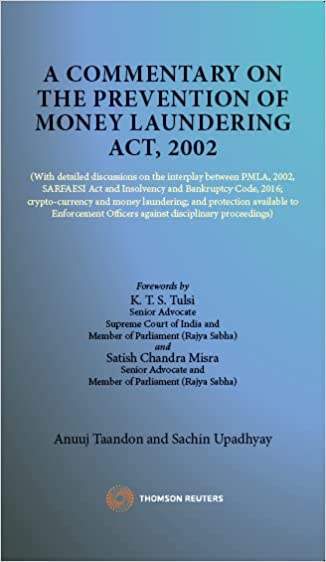
A Commentary on the Prevention of Money Laundering Act, 2002
RM320.00
BINDING: Hardcover
AUTHOR: ANUUJ TAANDON, SACHIN UPADHYAY
ISBN: 9789392630767
YEAR OF PUBLICATION: 2023
Sold out!
| Weight | 2 kg |
|---|---|
| Dimensions | 21 × 30 × 15 cm |
Customer Reviews
There are no reviews yet.
Only logged in customers who have purchased this product may leave a review.
Related products
-

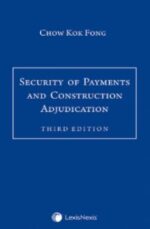
Security of Payments & Construction Adjudication, 3rd Edition
RM765.00- Publication Date: Jul – 2022
- Author: Chow Kok Fong
- ISBN: 9789815019254
- Format: Hardcover
- Country: Singapore
RM850.00 -

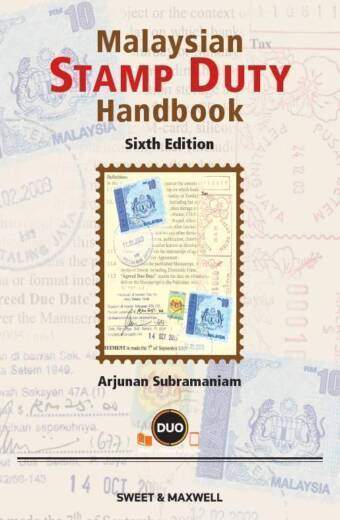
Malaysian Stamp Duty Handbook, 6th Edition
RM120.00Author: Arjunan Subramaniam
ISBN: 9789672339373
Published: May 2020
Format: DUO (Paperback + ProView eBook)
Country: Malaysia -

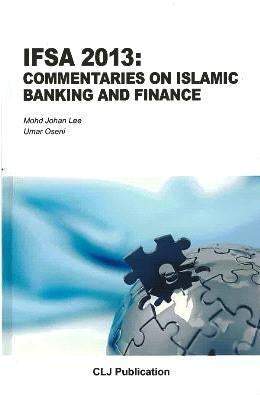
Ifsa 2013: Commentaries On Islamic Banking & Finance
RM230.00The enactment of the Islamic Financial Services Act 2013 (IFSA 2013) has marked an exceptional milestone in the development of the domestic Islamic financial industry. With a strong industrial bedrock created over 30 years,Malaysia has yet again pioneered the enabling legislative reformation vital for industrial fluidity and harmonisation.While the Act caters to all regulatory and supervisory aspects of the industry, this book aims to provide a succinct commentary on the provisions within the Islamic Banking parameters, As the nature of legislative demands change from a detailed and prescriptive approach to one which is principle- based, this book provides a perfect companion to assist readers in understanding and navigating the current legislative maze
-
Pilkington on Creditor Schemes of Arrangement and Restructuring Plans, 3rd edition
RM2,213.00Pilkington on Creditor Schemes of Arrangement and Restructuring Plans provides in-depth guidance on the legal principles, formal procedures and practical issues which underpin the use of schemes of arrangements and the new ‘restructuring plan’ option as used in complex financial restructurings. The expert author team at White & Case, under Christian Pilkington, cover the subject in full, taking in its development and the fundamental principles of its use as a restructuring tool, alongside key subjects such as jurisdiction, class composition issues and foreign recognition. Practical in its focus, the book provides not only diagrams and flowcharts which summarise complex processes but also case studies to illustrate different types of schemes of arrangement and explain some of the most high-profile international restructurings of recent years.
Schemes have become instrumental in the restructuring of UK and overseas-incorporated companies, and can still be recognised in different European jurisdictions even after Brexit. This combined with the new restructuring plan that builds on the scheme idea (and was introduced by CIGA 2020) make Pilkington an essential text for your insolvency library.
The 3rd edition:
- Explains the different types of restructuring schemes available and how they interact with the new restructuring plan introduced by CIGA 2020
- Features extensive analysis, precedent material and detailed case studies of schemes in operation
- Deals with the complex cross-border and jurisdictional issues facing practitioners
- Includes analysis of all key cases since the last edition and evaluates recent trends in scheme jurisprudence
- Considers the post-Brexit use of schemes in international restructurings
- Provides a comparative analysis with similar “cram-down” procedures in other jurisdictions
New to the 3rd edition:
- New content on restructuring plans, and how existing caselaw on schemes can be adapted and used in plans, plus analysis of the most important restructuring plans applied to date
- Analysis of the recent decisions including the first restructuring plans
- New case studies, and a review of the availability of schemes and plans after Brexit
- Considers all the key cases since the last edition, including (but not limited to):
- Re Noble Group [2018] EWHC 2911; Re DTEK Energy BV [2021] EWHC 1551 (Ch); Re ALL Scheme Ltd [2021] EWHC 1401 (Ch); Re Provident SPV Ltd [2021] EWHC 2217 (Ch)
The new and expanded 3rd edition is an in-depth and practical text, meaning the answers you require are easily found and applied to your everyday tasks. The expertise of the authors ensures that even the most complex aspects of the subject are confidently navigated. It is the indispensable guide to any question of corporate restructuring.
RM2,459.00 -
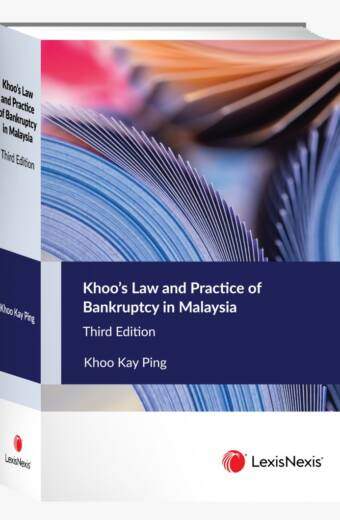
Khoo’s Law and Practice of Bankruptcy in Malaysia
RM340.00Since its inception in 2000, Khoo’s Law and Practice of Bankruptcy in Malaysia has been an effective reference book on the bankruptcy law and practice of the country, used not only in the law offices and the courts but also in the local universities and colleges. The book has been referred to in numerous reported cases, including two Federal Court decisions. 18 years after the second edition, the book has now been updated to incorporate all relevant reported cases up to 2020. The content has also been updated to reflect the changes introduced by the 2017 and 2020 Amendment Acts, thus providing readers a more comprehensive overview of the present landscape of bankruptcy law in Malaysia.
TABLE OF CONTENTS
Chapter 1 – Introduction
Chapter 2 – Bankruptcy Jurisdiction
Chapter 3 – Acts of Bankruptcy
Chapter 4 – Voluntary Arrangement
Chapter 5 – Bankruptcy Notice
Chapter 6 – Bankruptcy Petition
Chapter 7 – Interim Applications
Chapter 8 – Bankruptcy Order
Chapter 9 – Discovery, Realisation and Distribution of Estate Chapter 10 – Discharge
Chapter 11 – Special Forms of Administration
Chapter 12 – Director-General of Insolvency
Chapter 13 –Procedure
Chapter 14 – Criminal OffencesRM380.00 -
Islamic Banking & Finance 2ED
RM230.00Since its emergence, the phenomenal growth of the Islamic Banking and Finance industry has been experienced by most countries which have sought to develop it. its rapid global growth has generate many question about its conceptual basis and ethics in different jurisdictions. Many end-users, however, have now become critical about the foundations of Islamic Banking and finance, and by necessary extension, about its products and facilities. The number of cases and disputes brought before the court of law, questioning the legality of these products, and the diverse and at times conflicting decisions by judge thereon., is but one indicator as to how fast or how far thoughts, perceptions and understanding about Islamic banking and finance have advanced and metamorphosed.
-
PRINCIPLES OF INTERNATIONAL INSOLVENCY ( IN FAIR CONDITION )
RM800.00An advanced study of bankruptcy law in the major jurisdictions of the world in the context of international finance transactions and the impact that bankruptcy law has on these transactions. The work contains a classification of global jurisdictions and comparative studies of: the law of preferences; custodianship; judicial rehabilitation proceedings; the liabilities of directors and shareholders; lender liability; conflict of laws of insolvency; and the law and practice of private restructuring and work
-
The legal methods in Islamic administration
RM69.90The Legal Methods in Islamic Administration is considered as a revolution in the field of Islamic jurisprudence because the judge cannot decide in cases, according to the majority of Muslim scholars, except by the witnesses or the oath. But Ibn Al-Quayyim, a distinguished scholar and jurist of the 8th century, the author of this book explains that the judge in Islamic Law can decide in cases by more than twenty ways, all of which are based on the Holy Qur’an and the Sunnah, hence this work has been considered as a revolution.
This is a scholarly and monumental treatise on Islamic law. It reflects the idea of realizing the principles of shari’ah, particularly in the field of evidence and its application to contemporary issues.