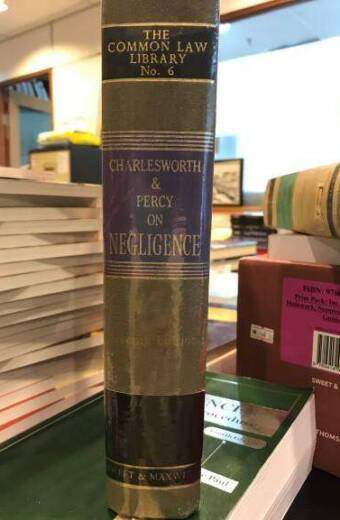
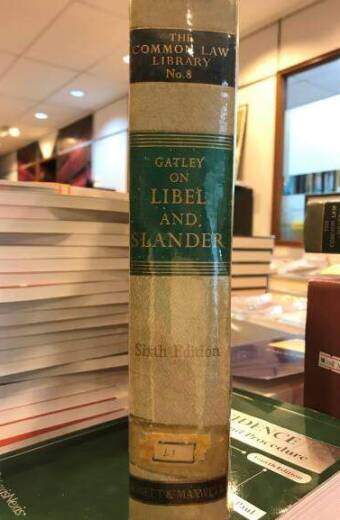
Author : Raymond Walton, Muir Hunter
ISBN: 0421229101
Published: June 1978
Country of Publication: UK
Format: Hardback
RM185.00
There are no reviews yet.
Only logged in customers who have purchased this product may leave a review.
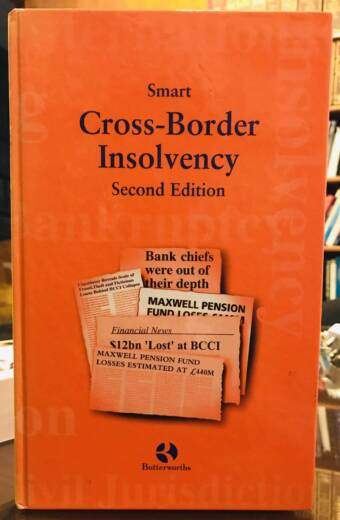
With recent high profile cases such as Maxwell, Barings and BCCI highlighting the fact that insolvency increasingly extends across national borders, practitioners in this area need specialist guidance on the particular problems which apply in cross-border insolvency.The second edition of this acclaimed book has been extensively revised to provide a practical analysis of the impact of new developments in cross-border insolvency law. Fully updated and expanded, this unique guide looks at recent case law as well as statutory developments, most notably the Civil Jurisdiction and Judgments Act 1982 (Interim Relief) Order 1997.With illustrations at the end of each chapter showing how to avoid practical problems, this thoroughly researched text gives insight into the impact and potential difficulties of the law, enabling the practitioner to anticipate problems before they arise.
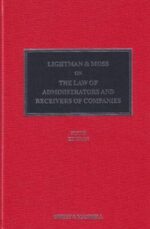
Lightman & Moss: The Law of Administrators and Receivers of Companies is known as the authority on the law relating to administrators and receivers. It is considered a must have for any practitioner dealing with corporate insolvency matters.
This new edition offers clear guidance on the procedures involved in the duties, liabilities and appointments of receivers and administrators. As well as discussing the issues surrounding trading, disposals, reorganisation, liquidation and receivership.
To ensure you have all the information you need in one reliable source, this edition offers a complete guide to every aspect on this complex area of law.
New to the 6th Edition
This book:

Edited by: Thomas Robinson, Peter Walton
ISBN13: 9780414046436
Published: December 2017
Country of Publication: UK
Format: Hardback
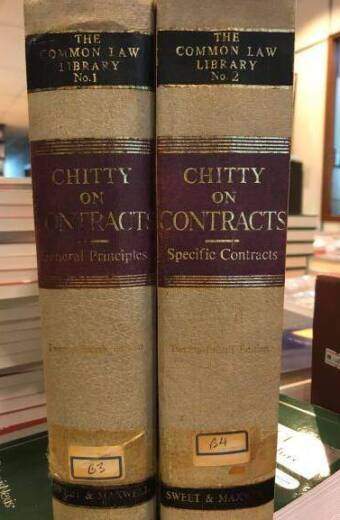
The twenty-fourth edition of Chitty on contracts has been published in two volumes (Volume 1: General Principles; Volume 2: Specific Contracts) by Sweet and Maxwell Limited, London. Divergencies in legislative provisions have rendered much of the material in Volume 2 no longer of direct application in Australia.
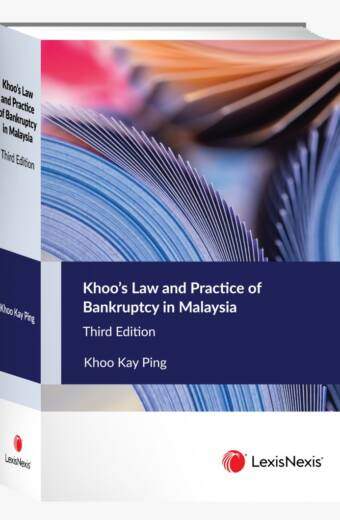
Since its inception in 2000, Khoo’s Law and Practice of Bankruptcy in Malaysia has been an effective reference book on the bankruptcy law and practice of the country, used not only in the law offices and the courts but also in the local universities and colleges. The book has been referred to in numerous reported cases, including two Federal Court decisions. 18 years after the second edition, the book has now been updated to incorporate all relevant reported cases up to 2020. The content has also been updated to reflect the changes introduced by the 2017 and 2020 Amendment Acts, thus providing readers a more comprehensive overview of the present landscape of bankruptcy law in Malaysia.
TABLE OF CONTENTS
Chapter 1 – Introduction
Chapter 2 – Bankruptcy Jurisdiction
Chapter 3 – Acts of Bankruptcy
Chapter 4 – Voluntary Arrangement
Chapter 5 – Bankruptcy Notice
Chapter 6 – Bankruptcy Petition
Chapter 7 – Interim Applications
Chapter 8 – Bankruptcy Order
Chapter 9 – Discovery, Realisation and Distribution of Estate Chapter 10 – Discharge
Chapter 11 – Special Forms of Administration
Chapter 12 – Director-General of Insolvency
Chapter 13 –Procedure
Chapter 14 – Criminal Offences
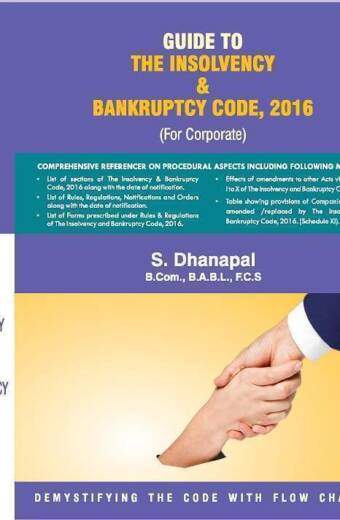
Insolvency and Bankruptcy Code, 2016 (Code) provides for a specialised forum to oversee all insolvency and liquidation proceedings for individuals, SMEs and corporates.
It empowers all classes of creditors (secured and unsecured lenders, employees, trade creditors, regulatory authorities) to trigger a resolution process in case of non payment of a valid claim.
Provides for immediate suspension of the Board of Directors and promoters’ powers.
Provides for an insolvency professional to take control of the Corporate debtor.
Enables a ‘stand-still period’ which provides stakeholders time to facilitate discussions and arrive at a common resolution rather than running independent processes.
Offers a finite time limit within which the debtor’s viability can be assessed and a resolution process agreed. The power of commercial decision to revive or liquidate the Company is on the creditors rather than the courts.
Provides for a balanced approach between rehabilitation and recovery and provides for compulsory liquidation of corporate debtors in the event the resolution has not been agreed within 180 days of the resolution process.
Aims to develop a detailed and accessible information system to reduce information asymmetry between the various participants of the insolvency process.
Provides for a clearly-defined waterfall mechanism for payment of debt in the event of a liquidation.