ISBN: 9789674009878
Edition: Third Edition
Format: Soft Cover
By: Khoo Kay Ping (Author)
Publisher: LexisNexis
Format: Paperback
save
RM40.00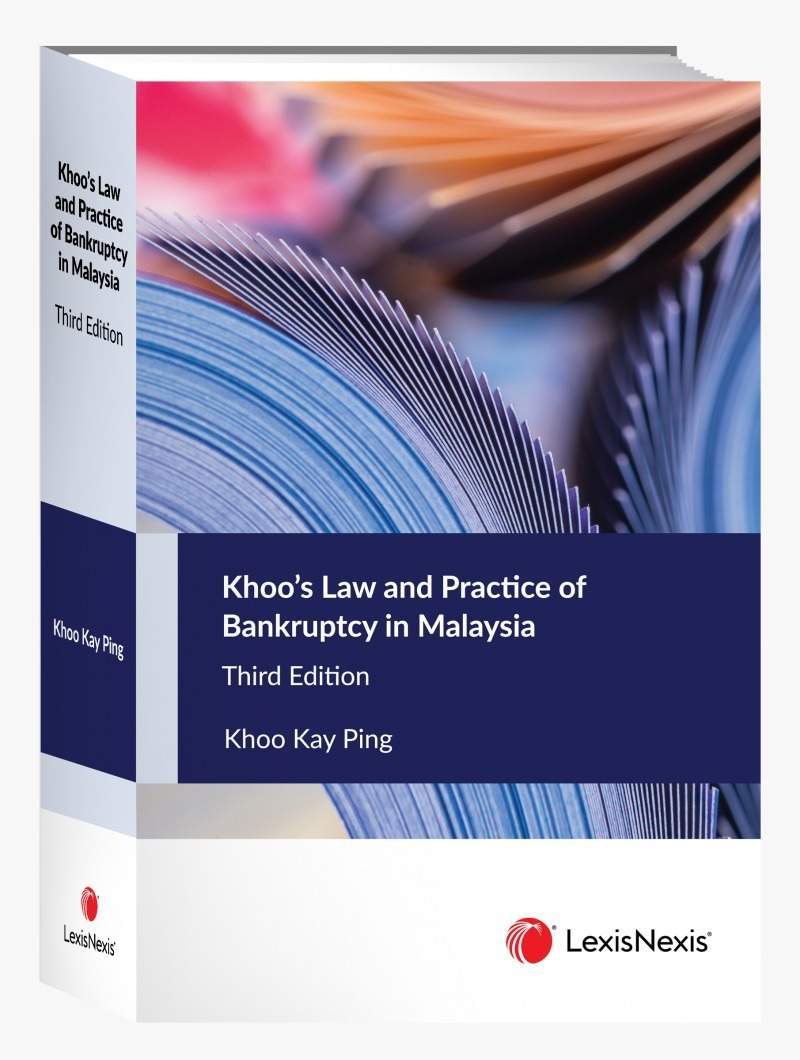
Khoo’s Law and Practice of Bankruptcy in Malaysia
RM340.00RM380.00
Since its inception in 2000, Khoo’s Law and Practice of Bankruptcy in Malaysia has been an effective reference book on the bankruptcy law and practice of the country, used not only in the law offices and the courts but also in the local universities and colleges. The book has been referred to in numerous reported cases, including two Federal Court decisions. 18 years after the second edition, the book has now been updated to incorporate all relevant reported cases up to 2020. The content has also been updated to reflect the changes introduced by the 2017 and 2020 Amendment Acts, thus providing readers a more comprehensive overview of the present landscape of bankruptcy law in Malaysia.
TABLE OF CONTENTS
Chapter 1 – Introduction
Chapter 2 – Bankruptcy Jurisdiction
Chapter 3 – Acts of Bankruptcy
Chapter 4 – Voluntary Arrangement
Chapter 5 – Bankruptcy Notice
Chapter 6 – Bankruptcy Petition
Chapter 7 – Interim Applications
Chapter 8 – Bankruptcy Order
Chapter 9 – Discovery, Realisation and Distribution of Estate Chapter 10 – Discharge
Chapter 11 – Special Forms of Administration
Chapter 12 – Director-General of Insolvency
Chapter 13 –Procedure
Chapter 14 – Criminal Offences
Customer Reviews
There are no reviews yet.
Only logged in customers who have purchased this product may leave a review.
Related products
-
-

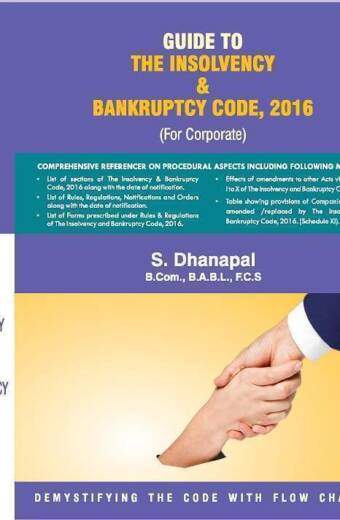
GUIDE TO THE INSOLVENCY & BANKRUPTCY CODE, 2016 (FOR CORPORATE) (IN FAIR CONDITION)
RM190.00Insolvency and Bankruptcy Code, 2016 (Code) provides for a specialised forum to oversee all insolvency and liquidation proceedings for individuals, SMEs and corporates.
It empowers all classes of creditors (secured and unsecured lenders, employees, trade creditors, regulatory authorities) to trigger a resolution process in case of non payment of a valid claim.
Provides for immediate suspension of the Board of Directors and promoters’ powers.
Provides for an insolvency professional to take control of the Corporate debtor.
Enables a ‘stand-still period’ which provides stakeholders time to facilitate discussions and arrive at a common resolution rather than running independent processes.
Offers a finite time limit within which the debtor’s viability can be assessed and a resolution process agreed. The power of commercial decision to revive or liquidate the Company is on the creditors rather than the courts.
Provides for a balanced approach between rehabilitation and recovery and provides for compulsory liquidation of corporate debtors in the event the resolution has not been agreed within 180 days of the resolution process.
Aims to develop a detailed and accessible information system to reduce information asymmetry between the various participants of the insolvency process.
Provides for a clearly-defined waterfall mechanism for payment of debt in the event of a liquidation.
-

Law and Practice of Corporate Insolvency in Malaysia
RM405.00Authors: GE: Rabindra S Nathan
Publisher: Sweet & Maxwell AsiaThe practical and analytical approach taken by this book greatly helps both those who are new to corporate insolvency practice in Malaysia as well as lawyers who would find the materials and references in this book a useful point of first reference.
RM450.00 -
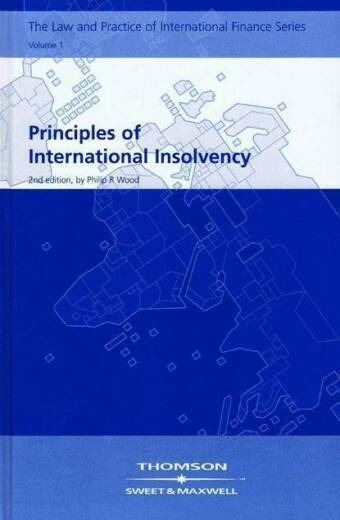
PRINCIPLES OF INTERNATIONAL INSOLVENCY 2ND EDITION
RM800.00This volume provides the most comprehensive and advanced study of insolvency law and practice in the world, providing the reader with a comparative overview of the law and practice in nearly all the world’s jurisdictions. Together with detailed analysis of substantive bankruptcy laws in the world’s major jurisdictions and snapshots of insolvency laws worldwide, it contains comparative studies of:
- Judicial reorganisations and plans
- Private restructuring agreements and workouts
- Liquidations
- The liabilities of corporate directors and lender liability
- Conflict of laws on insolvency, including the EU Insolvency Regulation and the UNCITRAL Model Law
- Voidable preferences
- Priorities, trusts and custodianship
- The impact of insolvency on contracts and leases
- Bank insolvencies and state insolvencies
-

The Law of Insolvency 5th Ed
RM2,207.00This book should be a practitioner’s first port of call for any question about the law of insolvency, whether corporate, personal, or cross-border in nature. This breadth of material is rendered accessible by a focus on the key problems and decision making processes involved in each area, and has been fully rewritten to incorporate the changes in practice and procedure made by the Insolvency Rules 2016.
Main Features:
- Incorporates major changes to primary and secondary legislation: Enterprise and Regulatory Reform Act 2013; Deregulation Act 2015; Small Business, Enterprise and Employment Act 2015; Insolvency Rules (England and Wales) 2016, plus Practice Directions issued in 2014.
Includes commentary on the EU Insolvency Regulation, both in the original (2000) and recast (2015) versions. - Significant changes to insolvency procedures, including the replacement of debtors’ bankruptcy petitions to the court by online applications to an adjudicator; the abolition in virtually all cases of physical meetings of creditors, and also of company members, during the course of insolvency proceedings; various alternative procedures for an office holder to obtain creditors’ and members’ consent, including by the deemed consent procedure; removal of the requirement for liquidators to obtain sanction for the exercise of certain powers; extension of liability for wrongful or fraudulent trading to cases of company administration.
- More than 300 new cases included in the new edition, including judgments by the Supreme Court in Jetivia v. Bilta (extraterritorial application of ss.213 and 238 of the Insolvency Act 1986); Olympic Airlines SA (jurisdiction under art.3(2) of the EU Insolvency Regulation); Eurosail (test for balance sheet insolvency); Belmont Park Investments (the anti-deprivation rule); Paycheck Services (meaning of “de facto director”); the Nortel and Lehman Companies Pensions Cases (“provable debts” in administration); Rubin v. Eurofinance (limits to common law assistance for foreign insolvency proceedings).
- Judgments by the Privy Council in cases relating to cross-border insolvency, including Saad Investments; Singularis Holdings; and Stichting Shell Pensioenfonds v.Krys.
RM2,452.00 - Incorporates major changes to primary and secondary legislation: Enterprise and Regulatory Reform Act 2013; Deregulation Act 2015; Small Business, Enterprise and Employment Act 2015; Insolvency Rules (England and Wales) 2016, plus Practice Directions issued in 2014.
-
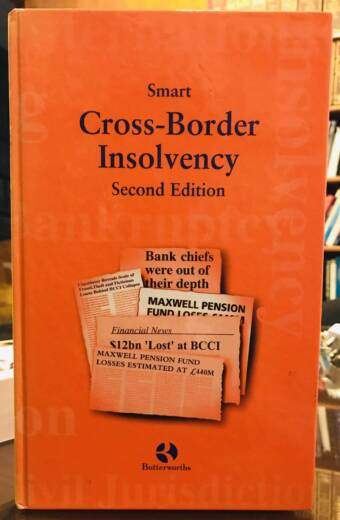
CROSS-BORDER INSOLVENCY SECOND EDITION ( IN GOOD CONDITION )
RM500.00With recent high profile cases such as Maxwell, Barings and BCCI highlighting the fact that insolvency increasingly extends across national borders, practitioners in this area need specialist guidance on the particular problems which apply in cross-border insolvency.The second edition of this acclaimed book has been extensively revised to provide a practical analysis of the impact of new developments in cross-border insolvency law. Fully updated and expanded, this unique guide looks at recent case law as well as statutory developments, most notably the Civil Jurisdiction and Judgments Act 1982 (Interim Relief) Order 1997.With illustrations at the end of each chapter showing how to avoid practical problems, this thoroughly researched text gives insight into the impact and potential difficulties of the law, enabling the practitioner to anticipate problems before they arise.
-
Cross-Border Insolvency: A Commentary on the UNCITRAL Model Law (Second Edition) (IN GOOD CONDITION)
RM275.00Given the current financial market crisis and economic uncertainty, cross-border insolvency is more topical than ever. Cross-Border Insolvency: A Commentary on the UNCITRAL Model Law (Second Edition) is an updated, enhanced edition covering the national implementation of the UNCITRAL Model Law on Cross-Border Insolvency. Written by specialists from each jurisdiction, this forthcoming new edition provides an in-depth, article-by-article analysis of the local enactment and application of the model law in each of the jurisdictions concerned, alongside consideration of the relationship between the model law and any existing cross-border insolvency jurisprudence. Each chapter adopts the same format for ease of reference, addressing key concepts such as the centre of main interests, court-to-court communication, enforcement of security interests and the protection of debtors and creditors. New to the second edition are chapters on Australia, the Cayman Islands, New Zealand and South Korea, and an in-depth analysis of recent case law such as the landmark US decisions in Bear Stearns. This major new edition provides an invaluable guide to the local application and comparative analysis of the model law for anyone dealing with cross-border insolvency issues. Lawyers in private practice or in-house, insolvency practitioners, government authorities, academics and students will find this expanded edition an essential addition to their library.
“synopsis” may belong to another edition of this title.
-
TOLLEY’S GUIDE TO THE LISTING RULES : TRANSACTIONS AND PROCEDURES ( IN FAIR CONDITION )
RM275.00This highly practical new handbook deals with listing rules from a transactional point of view, assisting users in implementing the rules laid down by the Financial Services and Markets Act 2000. It includes guidance on the regulatory framework, dealing with the UKLA, getting listed and working with other jurisdictions.
Written in a user-friendly style, this book contains checklists, flowcharts and a class test template which will guide the reader through this complex area.
Contents:
1. Introduction to the Listing Rules and UKLA
2. Equity securities market
3. Sponsors, enforcement and suspension of securities
4. Listing criteria and contents of listing particulars
5. The listing process
6. Specialised routes to market
7. Investment entities and venture capital trusts
8. Corporate governance and continuing obligations
9. Transactions and financial information
10. Dealing with the UKLA
11. Alternative Investment Market
12. Overseas companies and the EU
dealing with other jurisdictions and mutual recognition
13. Specialist securities and securitised derivatives
14. New developments – EU and UK
Appendix 1: Case studies
Appendix 2: Transaction checklist