Malaysian Legal System: Questions and Answers provides readers with the core explanation about the Malaysian legal system, for example, sources of law in Malaysia, concepts of constitutional supremacy and monarchy, separation of powers, doctrine of judicial precedent, court system, law-making processes, alternative dispute resolution and more.
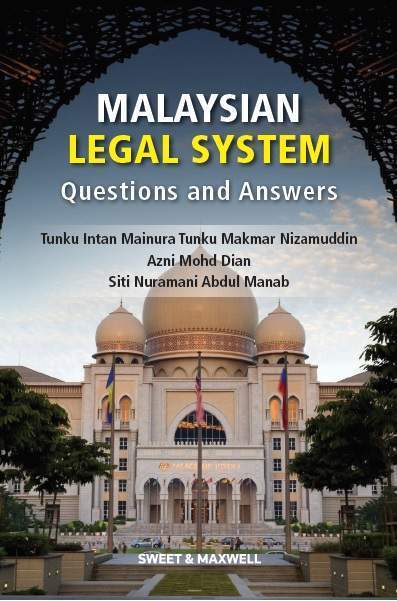
Malaysian Legal Systems: Questions and Answers
RM60.00
Author: Tunku Intan Mainura Tunku Makmar Nizamuddin, Azni Mohd Dian & Siti Nuramani Abdul Manab
Publisher: Sweet & Maxwell Asia
ISBN: 9789672339236
Malaysian Legal System: Questions and Answers provides readers with the core explanation about the Malaysian legal system, for example, sources of law in Malaysia, concepts of constitutional supremacy and monarchy, separation of powers, doctrine of judicial precedent, court system, law-making processes, alternative dispute resolution and more.
| ISBN | 9789672339236 |
|---|---|
| Authors | Tunku Intan Mainura Tunku Makmar Nizamuddin, Azni Mohd Dian & Siti Nuramani Abdul Manab |
| Publisher | Sweet & Maxwell Asia |
| Pub Date | Dec'19 |
| Format | PB (SE) |
Customer Reviews
There are no reviews yet.
Only logged in customers who have purchased this product may leave a review.
Related products
-

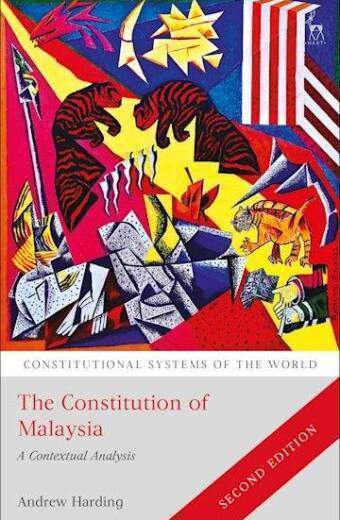
The Constitution Of Malaysia by Andrew Harding
RM175.00“This book should find its place in every person’s library…[it is] a resource for engagement and vital critical discourse.” Philip T. N. Koh, Star2
This is a welcome update to the definitive introduction to Malaysia’s constitution written by the subject’s foremost authority. Maintaining its all-encompassing perspective, it looks at constitutional governance in the context of authoritarianism and ongoing intercommunal conflict, as well as the effects of colonisation on Malaysia’s legal system.
It preserves its socio-political orientation while being completely updated to reflect all statute and case law developments. A fundamental text for all researchers and students of Malaysian law.
TABLE OF CONTENTS OF THE CONSTITUTION OF MALAYSIA, 2ND EDITION
1. Historical Background
I. Symbolic Malacca
II. The Constitution of Malacca and the Malay Concept of Monarchy
III. The Colonial Constitutional Experience: The Residential System
IV. Federalisation
V. The Malayan Union
VI. The Federation of Malaya
VII. The Reid Commission
VIII. The Commission’s Report and the Constitutional Debates
IX. The Creation of Malaysia
X. Conclusion
Further Reading2. Executive Power and the Configuration of the State
I. Introduction
II. Constitutional Structure of the Executive Power
A. Constitutional Monarchy
B. The Prime Minister
C. The Cabinet
D. Administrative Agencies and the Public Service
III. Privatisation and the Public–Private Interface
A. Privatisation and Development
B. Government-linked Companies, the State and the Public–Private Interface
IV. Conclusion
Further Reading3. The Social Contract
I. Explanation of the Concept and its Origins
II. The May 13 Incident and the ‘Rukunegara‘ Amendments
III. The Social Contract: Implementation and Critiques
Further Reading4. Parliamentary Democracy in a Plural Society
I. Introduction
II. Elections and the Composition of the Dewan Rakyat
III. Political Parties and the Political Process
IV. Parliamentary Process
V. Parliamentary Accountability
VI. Parliamentary Committees
VII. The Dewan Negara
VIII. Legislation and Emergency Powers
IX. Conclusion
Further Reading5. Territorial Governance: Monarchy and the State Constitutions
I. Introduction
II. The Powers and Position of the Rulers
III. State Government Formation and the Limits of Royal Powers
IV. The Conference of Rulers
V. Conclusion
Further Reading6. Territorial Governance: Federal, State and Local Government
I. Introduction
II. Federal and State Powers: A Measure of Autonomy
III. Federal and State Finance
IV. Asymmetry and the Special Position of Sabah and Sarawak
V. Local Government
VI. Conclusion
Further Reading7. Human Rights: A Struggle over Ambiguity
I. Introduction
II. Attitudes Towards Human Rights
III. Origins of Constitutional Rights
IV. Individual Liberty and Preventive Detention
V. Suhakam: The Human Rights Commission
VI. Human Rights: The Indigenous Perspective
VII. Conclusion
Further Reading
8. The Judiciary and the Defence of Judicial Power
I. Introduction
II. Judicial Independence and the Constitution
III. The Judicial Power
IV. Constitutional Interpretation
V. The Judicial Crisis of 1988
A. Judicial Activism 1986–88
B. The UMNO Election Case
C. A Perfect Storm: The Judiciary Entangled
D. The Bar Responds
VI. Judicial Independence: A Downward Slide
VII. A Scandal Leads to Better Outcomes: The Lawyers’ Walk for Justice
VIII. Conclusion
Further Reading9. Religion and the Constitution
I. Introduction
II. Law and Religion: History and Context
III. Islamicisation and the Islamic State
IV. Islam as the Official Religion
V. Religious Freedom
VI. Conversion and the Courts
VII. Conclusion
Further ReadingConclusion
-
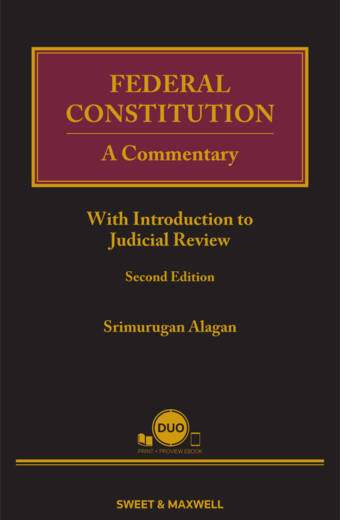
Federal Constitution: A Commentary (With Introduction to Judicial Review), 2nd Edition
RM445.00Author: Srimurugan Alagan
Publication Date: Aug 2024
ISBN: 9786297527987
Format: Hardcover + e-Book
Country: MalaysiaOne of the notable strengths of this book is its emphasis on the practical application of constitutional law principles. Further, the content is not limited to the exposition of constitutional provisions. It delves into the historical and political context in which the Malaysian Constitution was drafted, providing readers with a holistic understanding of the constitutional framework.
From the Foreword by Tan Sri Datuk Nallini Pathmanathan,
(Federal Court Judge)RM495.00 -
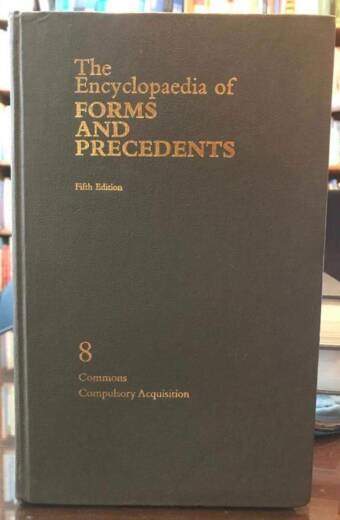
THE ENCYCLOPAEDIA OF FORMS AND PRECEDENTS FIFTH EDITION VOLUME 8
RM490.00Commons
Compulsory Acquisition
-
The Constitution of India
RM150.00COMMEMORATIVE EDITION:
To MARK THE-75TH ANNIVERSARY OF THE ADOPTION OF THE CONSTITUTION OF INDIA BY THE CONSTiTUTENT ASSEMBLY & THE ESTABLISHMENT OF INDIA’S FIRST CONSTITUTION MUSEUM
Author: O.P. Jindal Global University, Sonipat
ISBN: 9788187021916
To be Published: November 2024
Country of Publication: India
Format: SoftBackAvailable on Backorder (The processing time will be 2 to 4 weeks).
-
-

Constitutional Rights: Text, Cases & Materials
RM288.00Constitutional Rights: Text, Cases & Materials is a thought-provoking casebook designed for persons concerned with civil liberties. The comprehensive text covers important topics and landmark cases on constitutional rights in Malaysia, with broad exposition and detailed analysis of the law as provided by the Federal Constitution.
Key Features
- Thorough analysis of the Federal Constitution
- Extensive coverage of constitutional cases with extracts of important parts of the judgments
- Broad discussions on the Malaysian fundamental rights with reproduction of significant case authorities
- Extracts of international sources for easy reference
- Insightful analysis, commentary, as well as thought-provoking questions which can translate into winning arguments in litigation
- Consideration of foreign case law to enrich the understanding and appreciation of constitutional issues
- Incisive commentary of specialist editors with wide expertise in the Constitutional Law of Malaysia and Singapore
RM320.00 -
-
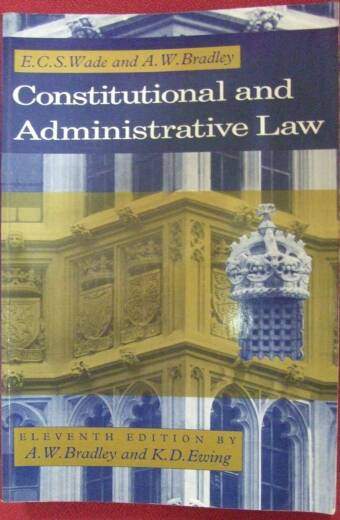
Constitutional and Administrative Law Eleventh Edition (IN FAIR CONDITION)
RM80.00This is a systematic account of a key topic in student law courses, and also an introduction to the literature of public law. This is a major textbook, covering all aspects of the subject – which is a required topic for entry into the legal profession in England, Wales and Northern Ireland and is also studied by all law students in Scotland. The changes to this edition include: the Public Order Act 1986, the Official Secrets Act, the Security Service Act and the Prevention of Terrorism (Temporary Provisions) Act, all of 1989 – measures that directly affect the individual’s civil liberties. It examines the increasing impact on Britain of the law of the European Communities and asks whether the United Kingdom needs a new Bill of Rights to keep national law in line with the European convention on Human Rights. Although the approach remains essentially the same as previous editions its structure has been revised. Much new material is included, ensuring the book is up-to-date and relevant to the study of law, government and politics today.