This work will ensure that practitioners and insurers have all the information and guidance they need to assess the risk of a case in a practical and effective way and learn to develop strategies to identify and manage risk in litigation. It covers the law and principles of conditional fee agreements as well as considering the insurance and funding aspects.

Risk Assessment in Litigation: Conditional Fee Agreements, Insurance & Funding
RM490.00
Author: David Chalk Principal Lecturer, Anglia Polytechnic University
Published in: June 2001
ISBN: 9781845927523
Format: Hardback
Country of Publication: UK
Customer Reviews
There are no reviews yet.
Only logged in customers who have purchased this product may leave a review.
Related products
-

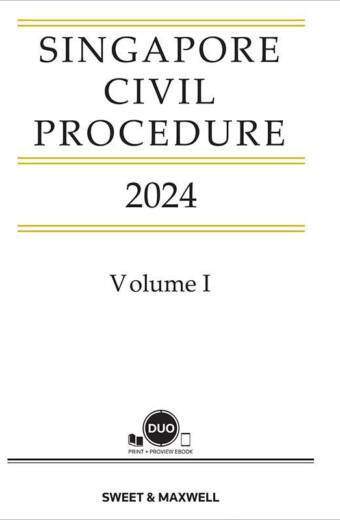
Singapore Civil Procedure 2024
RM5,589.00Author: Cavinder Bull S.C.
ISBN: 9789811876714
Format: DUO (Volume 1 in print, Volume 1 & 2 in ProView eBook format)
Country: Singapore -

Principles of Civil Cross Examinations with Different Types of Questions & Answers
RM104.00Author: Kant Mani
Publication Date: 2022
ISBN: 9789385444425
Format: Paperback
Country: India -
-

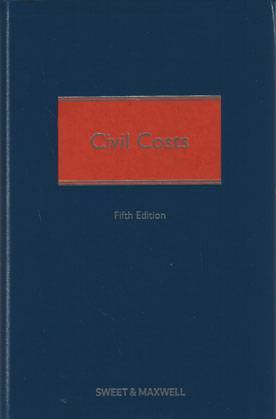
CIVIL COSTS FIFTH EDITION ( IN GOOD CONDITION )
RM500.00Civil Costs provides a thorough and authoritative survey of the costs regime under the Civil Procedure Rules, helping practitioners understand the technicalities of the law.
It deals with all areas of civil costs, from the basic principles of entitlement to the practical details of how costs – both contentious and non-contentious – are actually assessed.
- Clarifies the many areas of uncertainty so that points of law and procedures are fully understood
- Explains all the new costs legislation and rules implementing the Jackson reforms of civil litigation funding
- Considers the overhaul of the Conditional Fee Agreements regime and the implications in libel, personal injury and other areas
- Covers appeals against the summary and detailed assessment of costs
- Examines wasted costs sanctions and the court’s inherent jurisdiction
- Includes chapters on costs in arbitration proceedings, proceedings before the Court of Protection and before other tribunals
- Looks at the recovery of costs and the charging of interest on the unpaid amount
- Includes coverage of the award and assessment of costs in proceedings before the Supreme Court and European Court of Justice
-
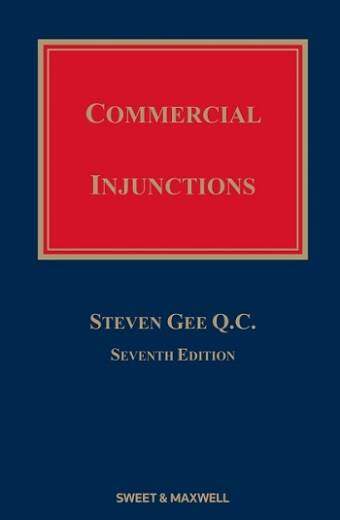
Commercial Injunctions 7th ed with 1st Supplement
RM2,348.00Author: Steven Gee Q. C.
ISBN13: 9780414109858Published: July 2022Country of Publication: UKFormat: HardbackRM2,471.00 -
Law and Practice of Civil Litigation in Malaysia
RM405.00Author: Robert Lazar
Published: Oct 2022
ISBN: 9789672723707
Format: DUO (Hardcover + e-Book)
Country: Malaysia“Lucid and practical, this is a work that should be on the shelf, and within easy reach, of every serious litigation practitioner.”From the Foreword byDatuk Darryl SC Goon(Retired Judge of the Court of Appeal)RM450.00 -
Malaysian Court Practice, 2022 Desk Edition, Appellate Court Practice
RM540.00This Malaysian Court Practice, Appellate Courts showcases updates to the Courts of Judicature Act 1964 (Act 91), Commissioners for Oaths Rules 2018 and the Rules of the Federal Court 1995, with latest updates to the current practice by the courts. Dato’ Seri Hishamudin has reviewed this book in its entirety and provided valuable updates such as further discussion on the exercise of the Prime Minister’s power under Article 122B of the Constitution against the Judicial Appointments Commission Act 2009 (Act 695) on appointments of judges to the superior courts (including the appointment of the Chief Justice of the Federal Court, the President of the Court of Appeal and the Chief Judges of the High Courts); limitation of Syariah courts; whether it is constitutional and legally competent to appoint a High Court judge to form a valid panel of the Federal Court.
Table of contents
Division I - Courts of Judicature Act 1964 (Act 91)
 Division II - Rules of the Federal Court 1995
 Division III - Rules of the Court of Appeal 1994
 Division IV - Rules of the Special Court
 Division V - Commissioners for Oaths Rules 1993
 Division VI - Practice Directions
RM600.00 -
Spencer Bower: Reliance-Based Estoppel
RM1,425.00Spencer Bower: Reliance-Based Estoppel, previously titled Estoppel by Representation, is the highly regarded and long established textbook on the doctrines of reliance-based estoppel, by which a party is prevented from changing his position if he has induced another to rely on it such that the other will suffer by that change.
Since the fourth edition in 2003 the House of Lords has decided two proprietary estoppel cases, Cobbe v Yeoman’s Row Property Management Ltd and Thorner v Major, whose combined effect is identified as helping to define a criterion for a reliance-based estoppel founded on a representation, namely that the party estopped actually intends the estoppel raiser to act in reliance on the representation, or is reasonably understood to intend him so to act. Other developments in the doctrine of proprietary estoppel have required a complete revision of the related chapter, Chapter 12, in this edition.
Thorner v Major confirms too the submission in the fourth edition that unequivocality is a requirement for any reliance-based estoppel founded on a representation. Other views expressed in the fourth edition are also noted to have been upheld, such as the recognition that an estoppel may be founded on a representation of law (Briggs v Gleeds), that a party may preclude itself from denying a proposition by contract as well as another’s reliance (Peekay Intermark Ltd v Australia and New Zealand Banking Group Ltd and Springwell Navigation Corp v JP Morgan Chase Bank) and that an estoppel by deed binds by agreement or declaration under seal rather than by reason of reliance (Prime Sight Ltd v Lavarello).
With the adjustment reflected in the change of title, and distinguishing the foundation of estoppels that bind by deed and by contract, the editors adopt Spencer Bower’s unificatory project by the identification of the reliance-based estoppels as aspects of a single principle preventing a change of position that would be unfair by reason of responsibility for prejudicial reliance. From this follow the views: that reliance-based estoppels have common requirements of responsibility, causation and prejudice; that estoppel by representation of fact is, like the other reliance-based estoppels, a rule of law; that the result of estoppel by representation of fact may, accordingly, be mitigated on equitable grounds to avoid injustice; that the result of an estoppel by convention depends on whether its subject matter is factual, promissory or proprietary; that a reliance-based estoppel (other than a proprietary estoppel, which uniquely generates a cause of action) may be deployed to complete a cause of action where, absent the estoppel, a cause of action would not lie, unless it would unacceptably subvert a rule of law (in particular the doctrine of consideration); that an estoppel as to a right in or over property generates a discretionary remedy; and that the prohibition on the deployment of a promissory estoppel as a sword should be understood as an application of the defence of illegality, viz that an estoppel may not unacceptably subvert a statute or rule of law.
Table Of Contents
Part I General Principles
Chapter 1 Introduction: definition and treatment
Chapter 2 Representations of fact; promises; representations of law; representations as to rights
Chapter 3 Responsibility
Chapter 4 Unequivocality and construction
Chapter 5 Inducement and reliance; the effect of estoppel as to a fact
Chapter 6 Parties to the estoppel
Chapter 7 The defence of illegality
Chapter 8 Estoppel by convention; estoppel by contract; estoppel by deed; estoppel as to title
Part II Particular Applications of Reliance-Based Estoppel
Chapter 9 Applications of reliance-based estoppel to various relationships
Chapter 10 Miscellaneous estoppels
Chapter 11 Statutory estoppel
Part III Proprietary Estoppel, Election, Promissory Estoppel and Procedure
Chapter 12 Proprietary estoppel
Chapter 13 Election
Chapter 14 Promissory estoppel
Chapter 15 Stating the caseRM1,500.00