Now in its eighth edition, this popular and readable book is intended mainly for students of the English legal system seeking a clear and topical account of the more important institutions and practices of our legal process. This book includes chapters on remedies so as to introduce students at an early stage to the major forms of redress available in both private and public law. Their inclusion will be helpful to the understanding of contract, tort, administrative, property and equity law. For this reason the book will be useful to those who have advanced beyond the first stage of their course. This new edition has been fully revised to take account of developments in the legal process since the publication of the seventh edition. It includes references to the Crime and Disorder Act 1998, the Competition Act 1998, the Data Protection Act 1998, the European Communities (Amendment) Act 1998, the Human Rights Act 1998, and the Access to Justice Act 1999. Many recent Court of Appeal and High Court case law developments are incorporated, including decisions on the correct test for determining whether an employment tribunal hearing is ‘in public’; whether a threat is an ‘insult’ for the purposes of the law of contempt; offences of strict liability; the per incuriam doctrine; the duty of counsel to keep up-to-date with new case law; damages for mental distress caused by the breach of a contract to provide pleasure, relaxation or peace of mind; and miscarriages of justice involving Patrick Nicholls, Ryan James and Danny McNamee. Important pronouncements by the House of Lords are noted on a variety of subjects, including decisions on challenges in a criminal court to the validity of delegated legislation; the recovery of money paid under a mistake of law; the inherent jurisdiction of the House to order the rehearing of an appeal; the requirements of mens rea in statutory offences; the purposeful approach to statutory interpretation; prospective overruling; the limits of judicial law-making; the rule against bias; and the effect of delay in seeking permission to apply for judicial review.
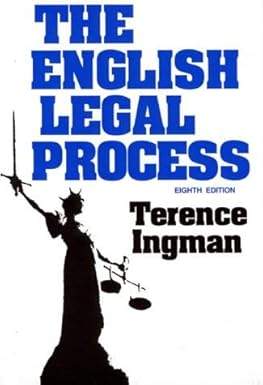
The English Legal Process
RM30.00
Author: Terence Ingman
ISBN: 9781841740287
Publication Date: Jan 8, 2000
Format: Hardback
Country: UK
Customer Reviews
There are no reviews yet.
Only logged in customers who have purchased this product may leave a review.
Related products
-

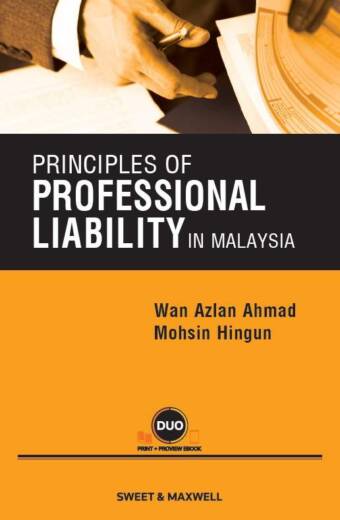
PRINCIPLES OF PROFESSIONAL LIABILITY IN MALAYSIA
RM180.00KEY TOPICS:
- Examination of the general law, and their application in respect of the selected professions.
- Guidance on the possible development of local law for difficult issues without settled local authorities.
- Specific duties arising either at common law, equity or under legislation in relation to the selected professions.
- Standard of care, and the relevancy of qualification and experience.
- The conditions, and limits, of the tests developed in Caparo Industries v Dickman and Smith v Eric Bush.
- The importance of a retainer and the application of the SAAMCO principle.
- The law regarding confidentiality.
- The application of limitation in claims for latent defects in buildings.
- Remedies for breach of fiduciary obligations.
- Quantification of damages.
This book seeks to examine the main principles of professional liability in Malaysia with emphasis on the liabilities in tort and equity, in addition to the obligations under contract and written law. While specific chapters are devoted to the law as is applicable to surveyors, construction professionals (exemplified by engineers, architects and quantity surveyors), accounting professionals, doctors and lawyers, the law is examined against the backdrop of the general law applicable to professionals generally.
The book provides the answers to some key questions – in what circumstances would a professional owe a duty to a client or to a third party, what is the standard of care the law demands that a professional should adhere to, and what would be the extent of the liability of a professional where a breach of duty is proved. In addition to the principles of assessment of damages in tort, emphasis is also given to the rules governing equitable compensation.
The authors have helpfully provided a wide range of pointers to relevant developments of the law in Commonwealth jurisdictions for better analysis and to show the way forward for Malaysian law where issues have yet to be decided in Malaysia.
CONTENTS
Introduction
Part I: General Principles
1. Duties in Contract and Tort
2. Fiduciary Obligations
3. Duties under Written Law
Part II: Duty and Breach
4. Surveyors
5. Construction Professionals
6. Accountants and Auditors
7. Doctors
8. Lawyers
Part III: Remedies and Damages
9. Remedies
10. Damages for Breach of Duty -
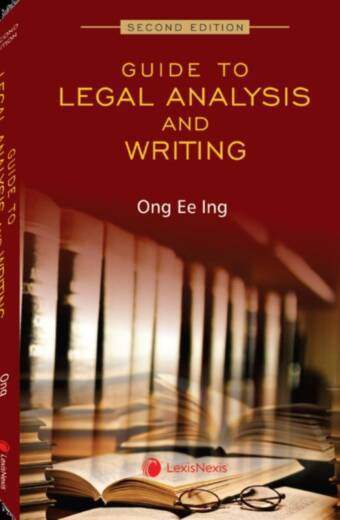
Guide to Legal Analysis and Writing, Second Edition
RM410.00ISBN: 9789815019551
Author: Ong Ee Ing
Format: Paperback
Year: Feb 2023
Publisher: Lexis Nexis (Singapore) -
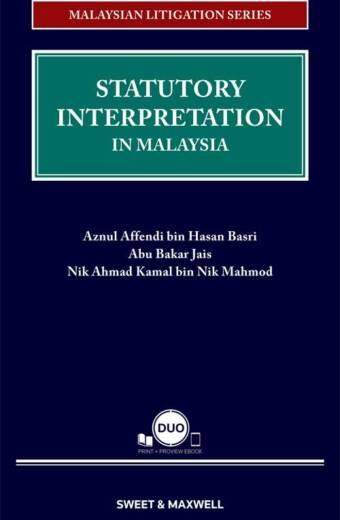
Statutory Interpretation in Malaysia | 2023
RM261.00Authors: Aznul Affendi bin Hasan Basri, Abu Bakar Jais, Nik Ahmad Kamal bin Nik Mahmod
Date: February 2023
Format: DUO (Print & Proview eBook)
ISBN: 9789672723981
Country: Malaysia“This book is a timely and useful addition to the legal literature on statutory interpretation as it provides insight into the development of statutory interpretation in Malaysian courts, particularly on constitutional matters.”– From the Foreword byTun Tengku Maimun binti Tuan MatChief Justice of MalaysiaRM290.00 -
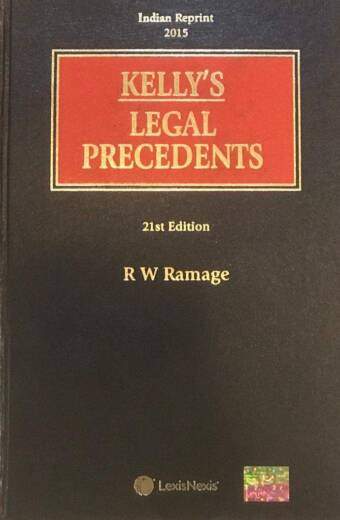
Kelly’s Legal Precedents, 21st Edition with 1st Cummulative Supplement (Asian Reprint)
RM1,150.00Formerly known as Kelly’s Draftsman, this unrivaled practical research and drafting tool provides a unique collection of the main forms and precedents practitioners are likely to need in their day-to-day practice. Kelly covers a broad range of subjects in depth.
Now available with the cumulative supplement which contains all updates to the main work since the publication of the 21st edition in 2014.
This supplement will expand the commercial precedents section with the aim of helping smaller firms win more lucrative and complex work.
- The First Cumulative Supplement was published in September 2015
- The Main Work was published in November 2014
Contents:
- Definitions – words and expressions
- Standard clauses
- Declarations (statutory) and Statements
- The formal part of the documents
- Arbitration
- Bills of exchange
- Bills of sale
- Commercial documents
- Companies
- Employment
- Guarantees and indemnities
- Partnership
- Sale of shares and businesses
- Assents
- Change of name
- Family
- Gifts
- Powers of attorney
- Trusts and trustees
- Wills
- Building agreements
- Easements and Boundaries
- Leases and tenancy agreements
- Mortgages
- Sale of land
- Associations
- Charities and social enterprises
RM1,350.00 -

STRIKING OUT PLEADINGS UNDER THE RULES OF THE HIGH COURT 1980
RM350.00This publication, Striking Out Pleadings under the Rules of the High Court 1980 explains in clear terms how and why a pleading may be struck out by the Court under O 18 r 19. Numerous cases, both local and foreign, on the subject of ‘Striking Out Pleadings’ are discussed in details, with cross references, for the benefit and interest of practising lawyers and law students. Even the Honourable Bench may find this publication with case laws very useful, in making their decisions.
-
SUMMARY JUDGEMENTS AND PROCEEDINGS ( SUMMARY JUDGEMENTS, SUMMARY PROCEEDINGS AND SPECIFIC PERFORMANCE UNDER THE RULES OF THE HIGH COURT 1980 )
RM350.00Summary Judgements and Proceedings explains in detail and with notes on cases, on selected topics from the Rules of the High Court 1980 ( RHC ) and also on O.26A of the Subordinate Courts Rules 1980 ( SCR ). The topics are wide in scope and flexible, in terms of their applicability in courts. They are Summary Judgements, Summary Proceedings and Specific Performance, under RHC and the Summary Judgements under SCR. The detailed explanation and clear guidance provided in this publication are solely based on numerous appellate court decisions.
-
GENERAL PRINCIPLES OF THE MALAYSIAN LEGAL SYSTEM
RM29.50General Principles of the Malaysian Legal System basically traces the history of the ancient laws of this country, way back to the year 1500, very much earlier than the first foreign administration in Malacca by the Portuguese. It elaborates how the customs and traditions practised by the locals those days, were eventually converted to customary laws. The customary laws influenced by the common laws of England and Equity, introduced by the English, led to the formation of the Laws of Malaysia and Islamic Law in Malaysia. An indepth analysis of this development of laws runs to more than three Chapters in this book.
This book, in adition, describes the Parliamentary process of law making, the functions of the Executive, Judiciary and the Legal Profession, as provided for by the Federal Constitution. This historical development of the legal system in Malaysia was gathered from numerous reliable sources by the combined efforts of Mr. Padmanabha Rau (Rau),a Senior Advocate, and Dr.T. Johnson Sampathkumar (Kumar), who holds a Ph.D. in Public Administration.