- Investigation & Pre-Trial Proceedings
- Authors: Lee Chong Fook, Mimi Sintia Haji Mohd Bajury & Che Audah Hassan
- ISBN: 9789674003821
- Student Edition
save
RM20.00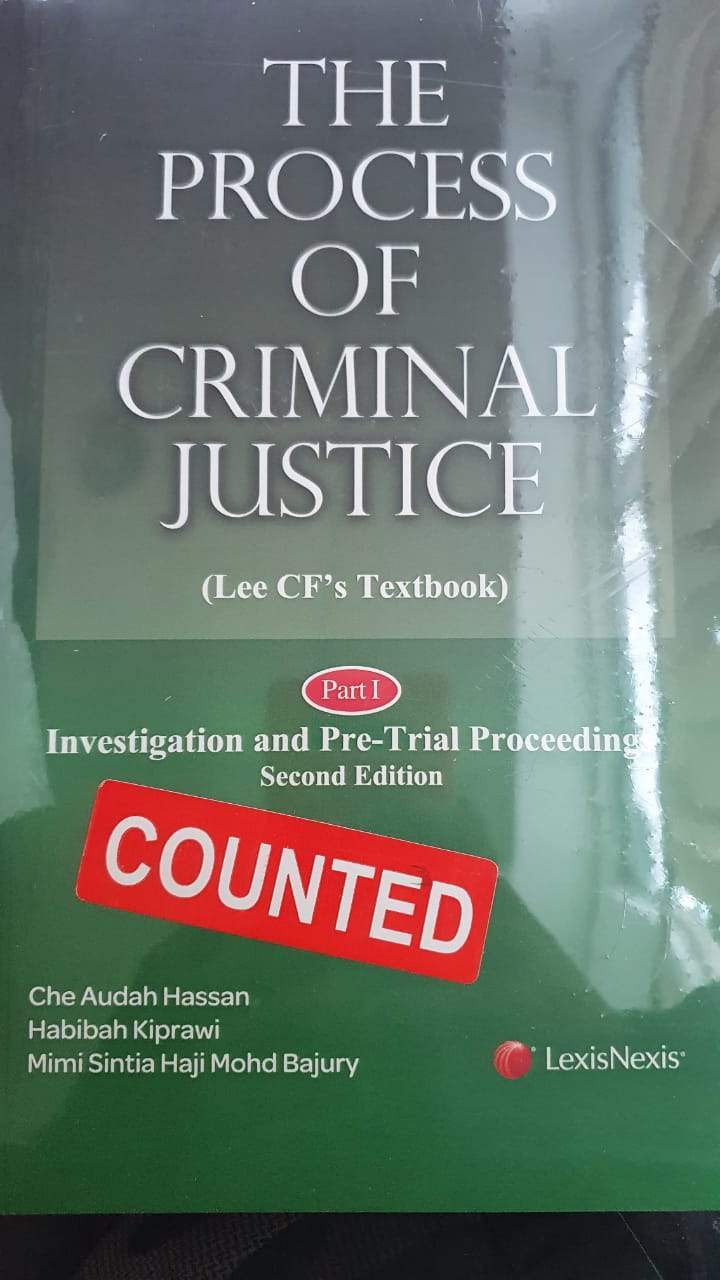
THE PROCESS OF CRIMINAL JUSTICE (Part 1) 2nd Ed
RM180.00RM200.00
Sold out!
Customer Reviews
There are no reviews yet.
Only logged in customers who have purchased this product may leave a review.
Related products
-

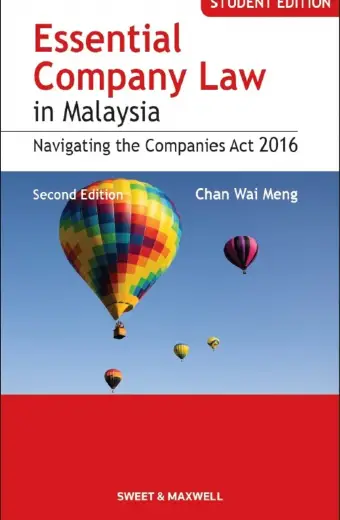
Essential Company Law in Malaysia: Navigating the Companies Act 2016, 2nd Edition (Student Edition)
RM90.00Presenting the law in a clear and concise style, this updated second edition guides and supports a quick understanding of the Malaysian company law system. Regular reference is made to the provisions of the Companies Act 2016 to enable the reader to appreciate the statutory scheme regulating companies in Malaysia. Illustrations are used to clarify concepts and cases are cited for reference. Mind maps have been included to assist a quick appreciation of key concepts and procedures. Comparison is made with the former scheme under the Companies Act 1965 where relevant and helpful comments are included to aid the analysis of more difficult areas of the law.
Each chapter begins with its learning objectives, presents the essential principles in succinct paragraphs and concludes with a summary to ensure that the reader obtains a clear understanding of the subject matter covered. A section titled “Points to Ponder” highlights difficult areas which may merit further discussion and consideration. The Appendix to the book contains a useful comparison of key provisions in the Companies Act 1965 and the Companies Act 2016.
Changes made by the Companies Act 2016 Reprint and the Companies (Amendment) Act 2019 have been covered, including the requirements for the execution of documents and the conditions for loans to directors.
This book is especially suitable for non-law degree students who take Company Law in their course of study as well as candidates taking MAICSA, ACCA, MICPA and MIA examinations. It can also be of interest to practitioners who need a quick refresher on basic principles and those who want to learn more about the general law relating to companies and how the Companies Act 2016 impacts their business.
Key Features of this New Edition
Presents essential principles in a clear and succinct style
Contains illustrations and charts that facilitate understanding
Mind maps support easy understanding of key concepts and procedure
New developments include the requirement for a register of beneficial owners, audit exemption and regulations on judicial management and corporate voluntary arrangement
Expanded coverage of the law on partnership and limited liability partnership
Extensive cross-referencing for easy navigation through the book
“Points to Ponder” highlights difficult areas which merit further consideration
Appendix makes available a useful comparison of differences between the Companies Act 1965 and the Companies Act 2016 and acts as an index to the contents of the book -
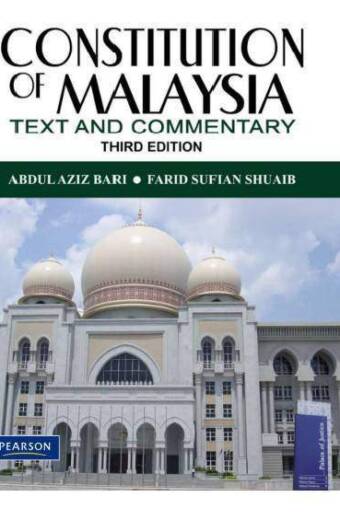
Constitution in Malaysia (Text and Commentary) 3rd Edition by Aziz Bari
RM60.00This latest edition incorporates new developments in the law while maintaining the simple and straightforward approach adopted in the first edition. The contents have been arranged in such a manner that readers are able to grasp the essence of the Constitution easily. Various issues in constitutional problems are highlighted in addition to the provisions of the Constitution as well as the materials needed to explain them.
-

Hanbury & Martin: Modern Equity 22nd ed
RM225.00Hanbury & Martin: Modern Equity provides an up-to-date and modern account of this challenging area of the law. This twenty-second edition of the long-standing work is the third edition under the present editors. The new edition contains rigorous analysis of the latest in case law and academic debate, with strengthened reference to other common law jurisdictions. Modern Equity continues to be unparalleled in breadth of scope and wealth of detail and remains the authority on equity and trusts law.
Features of the twenty-second edition:
- Comprehensive coverage of recent developments, including detailed analysis of key appellate decisions: those of the United Kingdom Supreme Court such as The Children’s Investment Fund Foundation v Attorney General on fiduciaries and administration, Stoffel & Co v Grondona on illegality, and R (on the application of Palestine Solidarity Campaign Ltd) v Secretary of State for Communities and Local Government on ethical investments; those of the Privy Council in Investec Trust (Guernsey) Ltd v Glenalla Properties Ltd on trustee liability and Webb v Webb on beneficial ownership; and various authorities at Court of Appeal level in the areas of fiduciary duties, proprietary estoppel, dishonest assistance and rectification
- Careful engagement with the application of the law in lower courts across the field of trusts and equity
- Further reference to relevant case law from Australia, Canada, Hong Kong and Singapore; and consideration of the position in off-shore jurisdictions
- Discussion of the impact of current legislation relating to trusts, tax and transparency
- Incorporation of legislative developments, including the Civil Partnerships, Marriages and Deaths (Registration etc) Act 2019 and applicable finance and pensions legislation
- Assessment of Law Commission proposals in relevant areas
Contents:
Part I: Introduction
1. History and Principles
2. Nature and Classification of Trusts
3. Equity and the Modern Commercial World
Part II: Trusts and Power
4. Certainty and Capacity
5. Constitution of Trusts
6. Formalities and Secret Trusts
7. Powers
8. Protective Trusts
9. Discretionary Trusts
10. Taxation and Trusts
11. Resulting Trusts
12. Constructive Trusts
13. Trusts of the Family Home
14. Trusts, Legal Policy, and Illegality
15. Charitable Trusts
16. Non-Charitable Purpose Trusts
17. Trusts of Pension Funds
Part III: Trustees and Fiduciaries
18. General Principles of the Administration of Trusts
19. Duties of Trustees in relation to the Trust of Property
20. Duties of Trustees in relation to the Beneficiaries
21. Powers of Trustees
22. Trusteeship and Fiduciary Duties
23. Variation of Trusts
Part IV: Personal and Proprietary Claims
24. Consequences of Breach of Trust
25. Personal Claims Against Third Parties
26. Tracing
Part V: Miscellaneous Equitable Remedies and Doctrines
27. Specific Performance
28. Injunctions
29. Rescission and Rectification
30. Licenses and Estoppel -
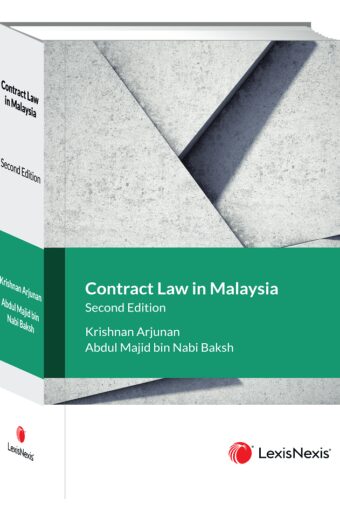
Contract Law in Malaysia, Second Edition
RM243.00Authors: Krishnan Arjunan, Abdul Majid bin Nabi Baksh
Publisher: LexisNexisThis second edition of the text offers a thoroughly updated and comprehensive account of the law of contract including chapters on Assignment, Bailment and Guarantees and Indemnities, and presents an in-depth exposition of these and other topics in Contract Law in prose that is clear, concise and readable.
RM270.00 -
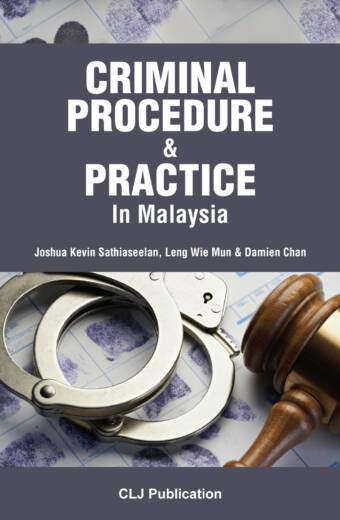
Criminal Procedure & Practice in Malaysia
RM225.00Criminal Procedure & Practice in Malaysia is an invaluable source of reference which highlights salient procedural rules and applications of the Criminal Procedure Code. The topics highlighted contains a summary of cases and related principles with relevant authorities. The book provides analysis on how criminal trial are handled and the procedures that need to be adhered to for compliance purposes. Flow charts and diagrams, among others, are provided to ensure that reader will have a clearer understanding of the subject matter. The book delivers a masterful account in a criminal courtroom as it engages both theoretical and practical aspects of criminal practice. Practitioners, students and those involved in the practice of Criminal Law should find this book useful.
RM250.00 -
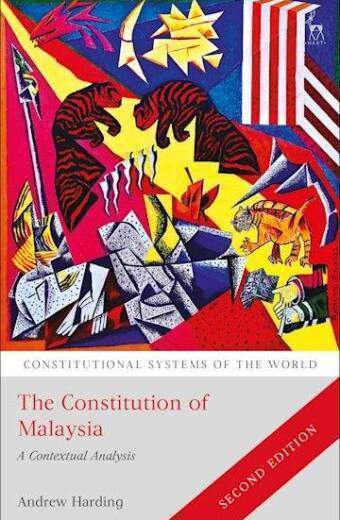
The Constitution Of Malaysia by Andrew Harding
RM175.00“This book should find its place in every person’s library…[it is] a resource for engagement and vital critical discourse.” Philip T. N. Koh, Star2
This is a welcome update to the definitive introduction to Malaysia’s constitution written by the subject’s foremost authority. Maintaining its all-encompassing perspective, it looks at constitutional governance in the context of authoritarianism and ongoing intercommunal conflict, as well as the effects of colonisation on Malaysia’s legal system.
It preserves its socio-political orientation while being completely updated to reflect all statute and case law developments. A fundamental text for all researchers and students of Malaysian law.
TABLE OF CONTENTS OF THE CONSTITUTION OF MALAYSIA, 2ND EDITION
1. Historical Background
I. Symbolic Malacca
II. The Constitution of Malacca and the Malay Concept of Monarchy
III. The Colonial Constitutional Experience: The Residential System
IV. Federalisation
V. The Malayan Union
VI. The Federation of Malaya
VII. The Reid Commission
VIII. The Commission’s Report and the Constitutional Debates
IX. The Creation of Malaysia
X. Conclusion
Further Reading2. Executive Power and the Configuration of the State
I. Introduction
II. Constitutional Structure of the Executive Power
A. Constitutional Monarchy
B. The Prime Minister
C. The Cabinet
D. Administrative Agencies and the Public Service
III. Privatisation and the Public–Private Interface
A. Privatisation and Development
B. Government-linked Companies, the State and the Public–Private Interface
IV. Conclusion
Further Reading3. The Social Contract
I. Explanation of the Concept and its Origins
II. The May 13 Incident and the ‘Rukunegara‘ Amendments
III. The Social Contract: Implementation and Critiques
Further Reading4. Parliamentary Democracy in a Plural Society
I. Introduction
II. Elections and the Composition of the Dewan Rakyat
III. Political Parties and the Political Process
IV. Parliamentary Process
V. Parliamentary Accountability
VI. Parliamentary Committees
VII. The Dewan Negara
VIII. Legislation and Emergency Powers
IX. Conclusion
Further Reading5. Territorial Governance: Monarchy and the State Constitutions
I. Introduction
II. The Powers and Position of the Rulers
III. State Government Formation and the Limits of Royal Powers
IV. The Conference of Rulers
V. Conclusion
Further Reading6. Territorial Governance: Federal, State and Local Government
I. Introduction
II. Federal and State Powers: A Measure of Autonomy
III. Federal and State Finance
IV. Asymmetry and the Special Position of Sabah and Sarawak
V. Local Government
VI. Conclusion
Further Reading7. Human Rights: A Struggle over Ambiguity
I. Introduction
II. Attitudes Towards Human Rights
III. Origins of Constitutional Rights
IV. Individual Liberty and Preventive Detention
V. Suhakam: The Human Rights Commission
VI. Human Rights: The Indigenous Perspective
VII. Conclusion
Further Reading
8. The Judiciary and the Defence of Judicial Power
I. Introduction
II. Judicial Independence and the Constitution
III. The Judicial Power
IV. Constitutional Interpretation
V. The Judicial Crisis of 1988
A. Judicial Activism 1986–88
B. The UMNO Election Case
C. A Perfect Storm: The Judiciary Entangled
D. The Bar Responds
VI. Judicial Independence: A Downward Slide
VII. A Scandal Leads to Better Outcomes: The Lawyers’ Walk for Justice
VIII. Conclusion
Further Reading9. Religion and the Constitution
I. Introduction
II. Law and Religion: History and Context
III. Islamicisation and the Islamic State
IV. Islam as the Official Religion
V. Religious Freedom
VI. Conversion and the Courts
VII. Conclusion
Further ReadingConclusion
-

MP Jain Administrative Law of Malaysia (Softcover)
RM252.00This comprehensive text covers both the jurisprudential and practical aspects of Administrative Law in Malaysia. Chapters such as nature and scope of Administrative Law, Rule of Law, and Administrative power provide an essential starting point for in-depth understanding of this area of the law while chapters such as Controls over subsidiary legislation, Natural justice, Judicial control over exercise of discretionary powers, and Government liability, enable readers to understand the procedural and substantive dimensions of Administrative Law in practice.
In this current edition, the book has been updated to include recent developments of Malaysian Administrative Law such as those relating to reviewability of administrative actions and decisions, separation of powers and application of constitutional provisions in judicial review applications.
Table of Contents
Chapter 1: Need for Administrative Law and the reasons for its growth
Chapter 2: Nature and scope of Administrative Law
Chapter 3: Rule of law
Chapter 4: Separation of powers
Chapter 5: Subsidiary legislation
Chapter 6: Controls over subsidiary legislation (1)
Chapter 7: Controls over subsidiary legislation (2)
Chapter 8: Administrative Adjudication
Chapter 9: Natural justice: when can it be claimed?
Chapter 10: Principles of natural justice
Chapter 11: Rule against bias
Chapter 12: Failure of natural justice
Chapter 13: Administrative power
Chapter 14: Discretionary powers (1)
Chapter 15: Discretionary powers (2)
Chapter 16: Sub-delegation of powers
Chapter 17: Government liability
Chapter 18: Right to information
Chapter 19: Judicial control of administrative action (1)
Chapter 20: Judicial control of administrative action (2)
Chapter 21: Ombudsman
Chapter 22: Public undertakings
RM280.00