This Second Edition of the Conditions of Contract for EPC/Turnkey Projects has been published by the Fédération Internationale des Ingénieurs-Conseils (FIDIC) as an update of the FIDIC 1999 Conditions of Contract for EPC/Turnkey Projects (Silver Book), First Edition. Along with the FIDIC 1999 Red Book (the Conditions of Contract for Construction) and the FIDIC 1999 Yellow Book (the Conditions of Contract for Plant and Design-Build), the FIDIC 1999 Silver Book has been in widespread use for nearly two decades. These Conditions of Contract for EPC/Turnkey Projects are not suitable for use in the following circumstances: – If there is insufficient time or information for tenderers to scrutinise and check the Employer’s Requirements or for them to carry out their designs, risk assessment studies and estimating; – If construction will involve substantial work underground or work in other areas which tenderers cannot inspect, unless special provisions are provided to account for unforeseen conditions or – If the Employer intends to supervise closely or control the Contractor’s work, or to review most of the construction drawings. FIDIC recommends that the Second Edition of the FIDIC Yellow Book (Conditions of Contract for Plant and Design-Build) be used in the above circumstances for Works designed by (or on behalf of) the Contractor. This Second Edition of the FIDIC Silver Book maintains the principles of risk sharing established in the 1999 edition, while seeking to build on the substantial experience gained from its use over the past 18 years. For example, this edition provides: 1) greater detail and clarity on the requirements for notices and other communications; 2) provisions to address Employers’ and Contractors’ claims treated equally and separated from disputes; 3) mechanisms for dispute avoidance and 4) detailed provisions for quality management, and verification of Contractor’s contractual compliance. These Conditions of Contract for EPC/Turnkey Projects include conditions, which are likely to apply to the majority of such contracts. Essential items of information which are particular to each individual contract are to be included in the Particular Conditions Part A – Contract Data. In addition it is recognised that many Employers, especially governmental agencies, may require special conditions of contract, or particular procedures, which differ from those included in the General Conditions. These should be included in Part B – Special Provisions. It should be noted, that the General Conditions and the Particular Conditions (Part A – Contract Data and Part B – Special Provisions) are all part of the Conditions of Contract. To assist Employers in preparing tender documents and in drafting Particular Conditions of Contract for specific contracts, this publication includes Notes on the Preparation of Tender Documents and Notes on the Preparation of Special Provisions, which provide important advice to drafters of contract documents, in particular the Employer’s Requirements and Special Provisions. In drafting Special Provisions, if clauses in the General Conditions are to be replaced or supplemented and before incorporating any example wording, Employers are urged to seek legal and engineering advice in an effort to avoid ambiguity and to ensure completeness and consistency with the other provisions of the contract. This publication begins with a series of comprehensive flow charts which typically show, in visual form, the sequences of activities which characterise the FIDIC EPC/Turnkey form of contract. The charts are illustrative, however, and must not be taken into consideration in the interpretation of the Conditions of Contract. This publication also includes a number of sample forms to help both Parties to develop a common understanding of what is required by third parties such as providers of securities and guarantees. Drafters of contract documents are reminded that the General Conditions of all FIDIC contracts are protected by copyright and trademark and may not be changed without specific written consent, usually in the form of a licence to amend, from FIDIC. If drafters wish to amend the provisions found in the General Conditions, the place for doing this is in the Particular Conditions Part B – Special Provisions, as mentioned above, and not by making changes in the General Conditions as published. FIDIC considers the official and authentic texts to be the versions in the English language.

FIDIC: Conditions of Contract for EPC/turnkey Projects, 2nd Edition
RM262.00
ISBN: 9782884320832
Year of Publication: 2017
Sold out!
Customer Reviews
There are no reviews yet.
Only logged in customers who have purchased this product may leave a review.
Related products
-

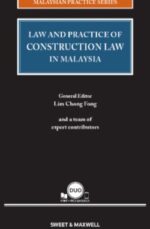
Law and Practice of Construction Law in Malaysia
RM405.00Author: Lim Chong Fong (General Editor)
Publication Date: Nov – 2021
ISBN: 9789672723028
Format: Hardcover + eBook
Country: MalaysiaRM450.00 -
Construction Arbitration and Alternative Dispute Resolution Theory and Practice around the World
RM1,540.00Edited: Renato Nazzini
ISBN13: 9780367710064
Published: Oct 2021
Country of Publication: UK
Format: HardbackRM1,620.00 -
Extra-Contractual Recoveries for Construction & Engineering Work (2 Vols)
RM1,345.00- Publication Date: May – 2022
- Author: Robert Fenwick Elliott
- ISBN: 9781913019570
- Format: Hardcover
- Country: U.K
-
FAC-1 Framework Alliance Contract: A Handbook
RM306.00Author: David MoseyISBN13: 9781913019839Published: April 2023Country of Publication: UKFormat: HARDback -
Malaysian Specialist Intellectual Property and Construction Courts: Practice & Procedure
RM200.00- Publication Date : Dec – 2020
- Author : Dato Lim Chong Fong
- ISBN : 9789672919162
- Format : Hardcover + eBook
- Country : Malaysia
-
Wilmot-Smith on Construction Contracts, Fourth Edition
RM1,568.00Authors: Richard Wilmot-Smith, Paul Darling QC
ISBN: 9780198832805
Published: 25 May 2021
Format: Hardback
Publisher: Oxford University Publishing (UK)RM1,650.00 -
-

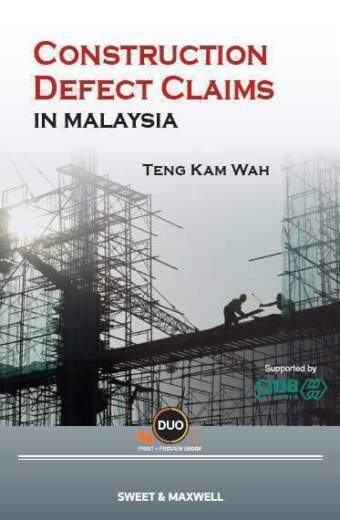
Construction Defect Claims in Malaysia
RM300.00Authors: Teng Kam Wah
Publisher: Sweet & Maxwell AsiaThis book focuses on the legal perspectives of claims for losses for defective work by and against the contractor. It also covers professional negligence, claims for pure economical loss, latent defects, as well as claims for financial and non-financial losses.