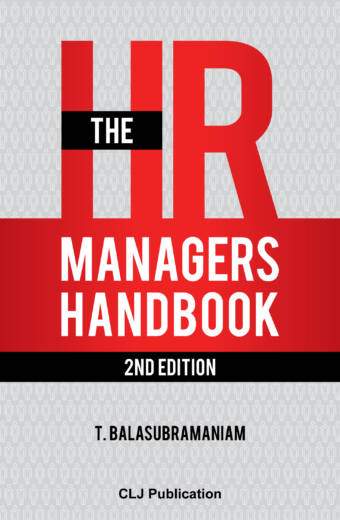
The Labour Ordinance of Sarawak (Amendment) Act 2025 came into force on 1 May 2025. With effect from that date, the Minister of Human Resources amended the First Schedule and increased the scope of the LOS from persons earning not more than RM2,500 to all persons engaged under a contract of service. This was indeed a quantum leap, benefiting all employees in Sarawak. The interests of employers were safeguarded by limiting entitlement to payments for overtime, work on rest days and public holidays and termination benefits to those earning not more than RM4,000 as well as to others engaged in manual labour, drivers and mechanics of mechanically propelled vehicles, supervisors of manual labourers, recruiters, ship officers and domestic servants. One of the greatest benefits that all employees, irrespective of salary, will enjoy is access to the Labour Court.
The Labour (Part-Time Employees) (Sarawak) Rules 2013 and the Labour (Termination and Lay-Off Benefits) (Sarawak) Rules 2008 have been presented with practical examples and relevant case law. An additional feature of this book is the inclusion of more than 60 FAQs on the LOS with answers to encourage the reader to apply the law to practical problems that usually arise in the course of the HR practitioner’s work.
About the Author:
T. Balasubramaniam started his career as a Kirkby-trained teacher in 1960. He has been involved in industrial relations since 1961, when he set up the Terengganu Division of the MTUC. After obtaining a Second Class Upper Honours degree in Social Science (Econs), with distinction in Industrial Relations, he joined the Malayan Employers Federation from which he retired as Senior Industrial Relations Advisor. While at MEF, he obtained his LLB (Hons). He has served on the National Labour Advisory Council and has represented employers before the Industrial Court and the Labour Court. He has also served as a part-time lecturer in Labour Law at Universiti Kebangsaan Malaysia, a part-time tutor in Economics at Universiti Malaya and in Quantitative Methods at Universiti Sains Malaysia. He has conducted numerous courses on labour law and industrial relations and is the author of several books on labour law.